
Shaping the conversation means offering context to extreme ideas, not just a platform
- When public figures engage with individuals who hold extreme views, it’s not just about whether to interact or censor; it’s also about how to structure that engagement and its purpose.
- The format and tone of an interview can greatly impact its ethical work. Conversations that present all viewpoints as morally equivalent risk signaling that even extreme positions belong within normal political discourse.
- Listening is not the same as neutrality, and people often confuse active listening with agreement. This can lead to conversations sounding civil while failing to challenge harmful claims, leaving listeners with a mistaken belief that those claims are widely held.
- A more effective approach to engaging with extreme views is to use a “calling forward” framework, which focuses on private accountability and the possibility of correction, rather than simply calling out or normalizing the ideas.
- By understanding the distinction between engagement and refusal, we can pay attention not only to who is invited to speak but also to how we listen, and strive for conversations that are both curious and accountable, without necessarily signaling agreement with extreme views.
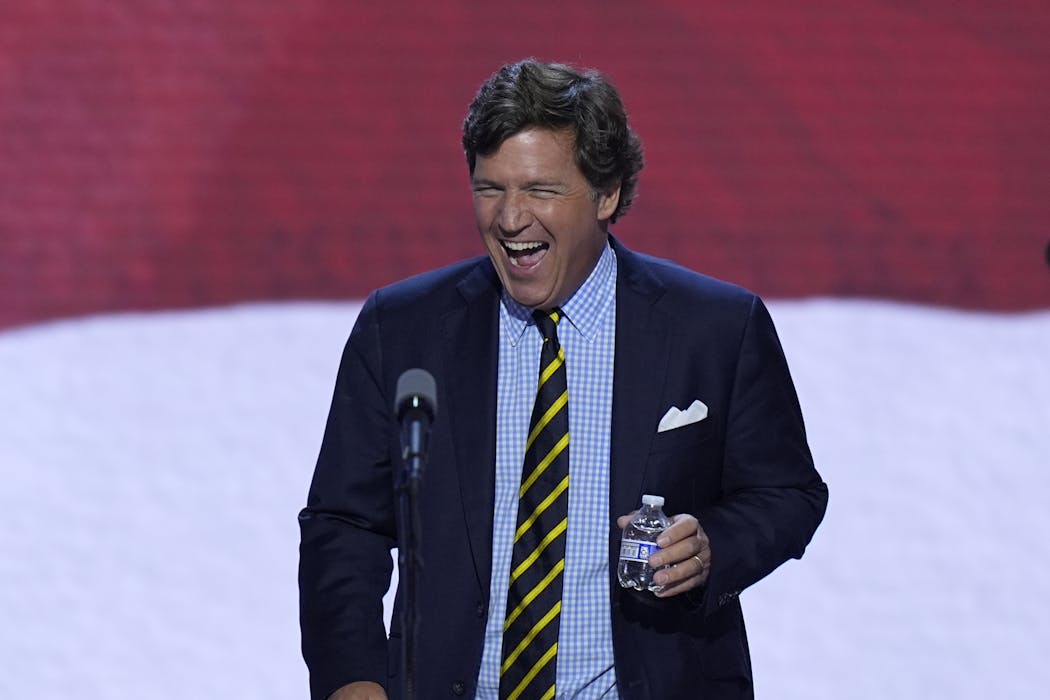
The Oct. 27, 2025, interview between former Fox News host Tucker Carlson and political streamer Nick Fuentes created a rare public divide inside the MAGA movement.
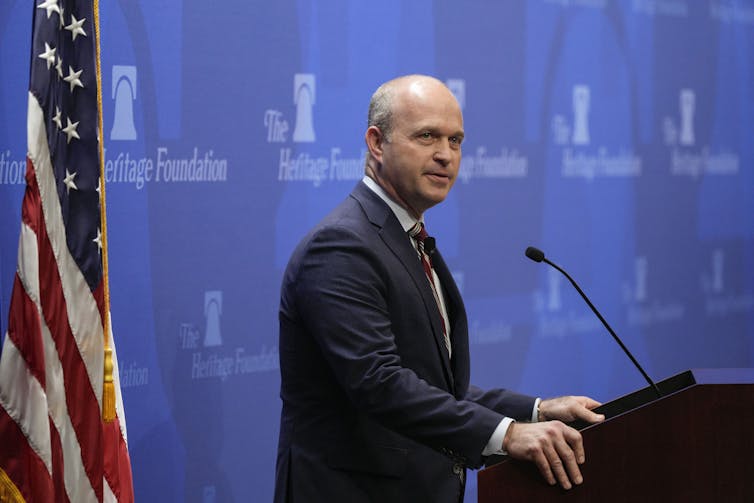
Critics say Carlson gave Fuentes a national platform to advance his antisemitic and white nationalist views. Some conservatives, including President Donald Trump and Heritage Foundation president Kevin Roberts, defended the conversation as necessary to understand a growing segment of the movement.
These reactions may seem incompatible, but both contain slices of the truth. Public debates about extreme views often pull us toward simple binaries – platform or censor, engage or avoid – when the real issue is how the engagement is structured and the purpose it serves.
The current tension raises a broader question that extends beyond any single interview: When does a conversation with someone who holds extreme views illuminate their beliefs, which could serve the public interest, and when might it risk being interpreted as validation?
As a communication scholar who studies how people engage across deep divides, I see this as a question not about whether to interact with individuals who espouse extremist views, but how to structure that engagement and to what end.
Engaging ideas does not mean endorsing
When public figures say they are “just asking questions” or having a “respectful debate,” it’s easy to assume they believe that all conversation is valuable. Indeed, Carlson opened his interview by claiming he is simply “trying to understand” what Fuentes “affirmatively believes.”
In practice, however, the format and tone of an interview do much of the ethical work. Some conversations interrogate ideas. Others normalize them, meaning they make extreme claims sound ordinary or socially acceptable – in other words, treating them as just another position in public debate rather than as views outside widely shared norms. A conversation that presents all viewpoints as morally equivalent risks signaling that even extreme positions belong within normal political discourse.
Jess Rapfogel/AP
This is the concern raised by Carlson’s interview. Fuentes has made a series of claims about Jewish people that mainstream conservatives have rejected for decades. Although Carlson pushed back at one point, saying Fuentes’s views are “against my Christian faith,” the overall tone of polite exchange allowed some listeners to interpret the discussion as a meeting of two legitimate positions rather than as a critical examination of ideas widely understood as bigoted.
Listening is not neutrality
One explanation for these differing interpretations comes from a recent series of experiments showing speakers often confuse “active listening” with agreement. Even when they had maintained eye contact and signaled attention using short phrases like “I see,” listeners who disagreed were consistently judged as worse listeners. Because people tend to assume their own views are correct, they often infer that anyone who disagrees must not have listened well.
This psychological tendency complicates how the public interprets interviews like Carlson’s. Conversations can sound civil while failing to challenge harmful claims, leaving listeners with the mistaken belief that those claims are widely held.
Listeners operating from a humanizing mode attempt to understand the person behind the belief, asking questions such as “When did you first encounter this idea?” or “What was happening in your life at the time?” or “What concerns does this belief address for you?” A decade ago, a Dutch study found that extremist views often grow from fear, misinformation, isolation and a desire for belonging, along with other demographic, personality and social factors. Understanding those roots helps explain how individuals arrive at certain worldviews.
But understanding is not the same as acceptance. Good listening does not have to signal agreement.
Examples of this kind of engagement exist outside politics. Former extremists such as Christian Picciolini, who founded the Free Radicals Project, and musician Daryl Davis, known for building relationships with members of the Ku Klux Klan, have shown that humanizing conversations can help people leave hate groups without normalizing the ideas those groups promote. Their work illustrates that it is possible to confront harmful beliefs while still recognizing the humanity of the people who hold them.
Moving beyond just calling out
The ongoing debate about Carlson and Fuentes also reflects a broader tension in terms of how society responds to harmful speech.
Calling someone out, usually in public, focuses on blame. “Calling someone in,” a term developed by scholar and activist Loretta Ross, emphasizes private accountability and the possibility of correction. In a media setting, this might look like an interviewer saying, “I want to understand what you mean by that claim, because some viewers may hear it as targeting an entire group. Can you clarify how you see the people affected by this?” This approach challenges the idea while signaling curiosity about the speaker’s reasoning.

Jacquelyn Martin/AP
A similar approach, described by authors Justin Michael Williams and Shelly Tygielski, is known as “calling forward.” This framework focuses less on correcting a single remark, less on past mistakes and more on future growth by inviting reflection about how a belief fits within a person’s broader values. In practical terms, calling forward means setting clear boundaries around unacceptable beliefs while still recognizing an individual’s potential to change.
Using a “calling forward” approach, Carlson might have followed his mild pushback that Fuentes’s ideas are against his “Christian faith” by exploring how Fuentes understands the tension between his political claims and widely held moral or religious principles.
By stating directly when a claim is false or discriminatory but still allowing the conversation to explore how someone came to that belief, the interview places the idea in a fuller social and psychological context. The emphasis shifts to curiosity paired with accountability, and it can encourage someone to examine the roots and consequences of their beliefs without framing the exchange as a clash between equal positions.
Most people will never interview a national figure or decide whether to put an extremist on camera. Ideally, most of us won’t be faced with the burden of listening to views that question our or others’ humanity.
Even so, each of us likely has a relationship with someone who holds a belief we find troubling. More broadly, families, classrooms and community groups all face moments when someone introduces an idea that others find threatening.
The Carlson–Fuentes interview has become a flash point partly because it forces a public reckoning with a private question: What is the cost of engagement, and what is the cost of refusing it? Understanding that distinction requires paying attention not only to who is invited to speak, but also to how the ways in which we listen fundamentally shape the conversation.

Graham Bodie does not work for, consult, own shares in or receive funding from any company or organization that would benefit from this article, and has disclosed no relevant affiliations beyond their academic appointment.