
How climate shaped bears, dogs, and more
- Researchers at the University of Washington studied over 850 carnivoran specimens to understand how climate changes shaped their body shapes.
- The study found that two major climate transitions, around 34 million years ago and 15-13 million years ago, led to changes in body shape between different carnivoran families.
- For example, the Eocene-Oligocene Transition changed the body shape between cat-like and dog-like species, while the Mid-Miocene Climate Transition changed within canid species.
- The researchers analyzed skeletal shapes of over 200 existing and 81 extinct species to gain insights into how climate influenced their evolution.
- The study’s findings were published in Proceedings of the Royal Society B and provide new insights into the impact of climate change on animal body shapes, shedding light on the diversity of carnivorans today.
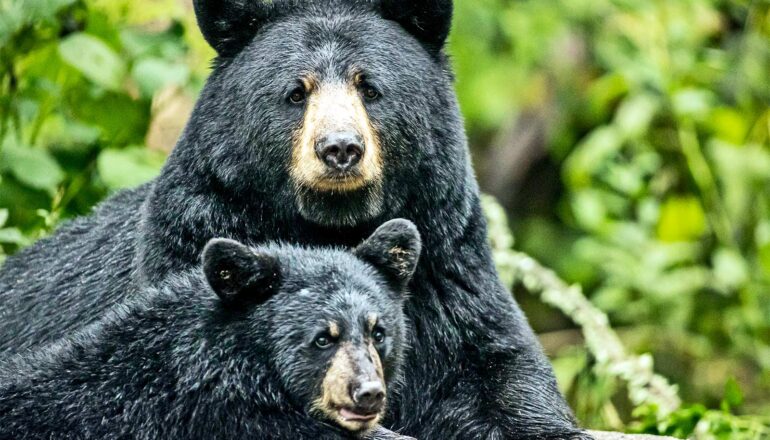
New research digs into how changes in Earth’s climates shaped a group of animals called carnivorans.
The ancestors of our furry cats and dogs once looked similar to today’s modern mongoose, a mammal with a long body and small, round ears. In fact, all members of the order Carnivora, which includes a variety of mammalian species, such as bears, wolves, and even seals, evolved from these “mongoose-like” creatures.
How did such a variety of body shapes emerge from one body type? The new research led by the University of Washington suggests that two different climate transitions millions of years ago fueled this change.
The team, led by Chris Law, a UW principal research scientist in biology, studied the skeletal shapes of more than 850 carnivoran specimens held at 17 different natural history museums. The specimens include almost 200 different species of carnivorans: 118 that currently exist and 81 that are extinct.
The researchers found that the Eocene-Oligocene Transition, which took place around 34 million years ago, led to changes in body shape between different carnivoran families—such as between cats and dogs. Then the Mid-Miocene Climate Transition, which took place around 15 to 13 million years ago, led to changes within families—such as changes between canid species.
The team published these findings in Proceedings of the Royal Society B.
Here, Law, who is also an affiliate curator at the UW Burke Museum of Natural History and Culture, explains more about these results and what they mean for carnivorans today:
The post How climate shaped bears, dogs, and more appeared first on Futurity.