
How does helping family across generations affect health?
- A new study of over 38,000 adults across Europe explores the impact of intergenerational support on health.
- The study suggests that the relationships between helping family members across generations may be more complex and common than previously thought.
- Intergenerational support can take many forms, including financial assistance, emotional support, and caregiving for elderly or disabled relatives.
- The study found that these types of support relationships are becoming increasingly common in countries with aging populations.
- The impact of intergenerational support on physical and mental health is still uncertain, but the study aims to shed light on this complex issue.
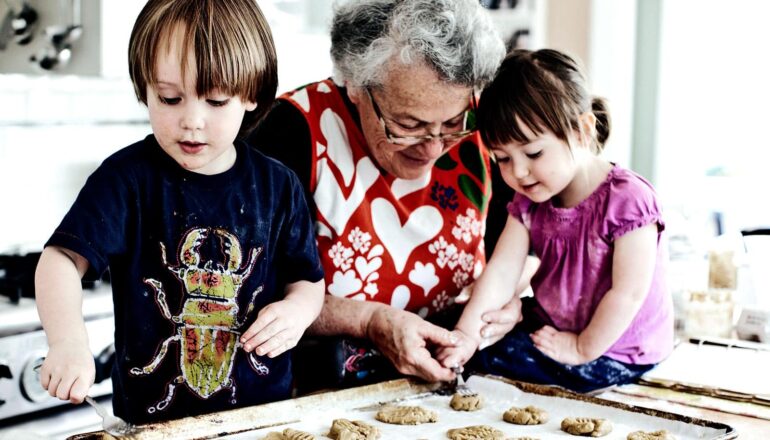
A new study of more than 38,000 adults across Europe finds that the relationships between intergenerational support and health may be more complicated—and more common—than previously thought.
It’s not unusual for grown children, parents, and grandparents to rely on each other—and these types of intergenerational support may become more common in countries with aging populations. But there is significant uncertainty about the impact that these intergenerational support relationships may have on physical and mental health.
Here, Anna Manzoni, coauthor of a paper on the work and a professor of sociology at NC State, explains more about the work:
The post How does helping family across generations affect health? appeared first on Futurity.
Q. What is the main focus of the study mentioned in the article?
A. The study focuses on the relationships between intergenerational support and health among adults across Europe.
Q. How many adults were involved in the study?
A. More than 38,000 adults from Europe participated in the study.
Q. Why are intergenerational support relationships becoming more common?
A. These relationships are becoming more common due to aging populations in countries.
Q. What is the uncertainty surrounding intergenerational support relationships and health?
A. There is significant uncertainty about the impact of these relationships on physical and mental health.
Q. Who co-authored a paper on the work mentioned in the article?
A. Anna Manzoni, a professor of sociology at NC State, co-authored the paper.
Q. What type of relationship does Anna Manzoni have to the topic discussed in the article?
A. Anna Manzoni is a coauthor and expert on the topic of intergenerational support relationships and health.
Q. Why are these types of relationships significant?
A. These relationships may become more common in countries with aging populations, making them significant for understanding health outcomes.
Q. What can be inferred about the impact of intergenerational support relationships on health from the study?
A. The study suggests that the impact of these relationships on physical and mental health may be more complicated and common than previously thought.