
A, B, C or D – grades might not say all that much about what students are actually learning
- Alternative grading approaches are being explored by educators to rethink traditional grading practices, which have been found to decrease students’ intrinsic motivation and cultivate a fear of failure.
- These alternative models aim to address issues such as inequities in education, where students from low-resourced schools often receive worse grades than their peers from better-resourced schools, leading to opportunity gaps and limited access to college opportunities.
- Some popular alternative grading approaches include standards-based grading, unlimited retakes on tests, portfolio-based grading, and collaborative grading (or ungrading), which focus on demonstrating mastery and learning rather than just assigning a letter grade.
- The movement towards alternative grading is gaining traction, with many educators and researchers advocating for change, but there are still challenges to overcome, including logistical support from administrations, teacher buy-in, and parental support.
- Despite the potential benefits of alternative grading, it’s essential to discuss these alternatives and address the underlying issues with traditional grading practices, as they have become deeply ingrained in the education system and can be difficult to change.
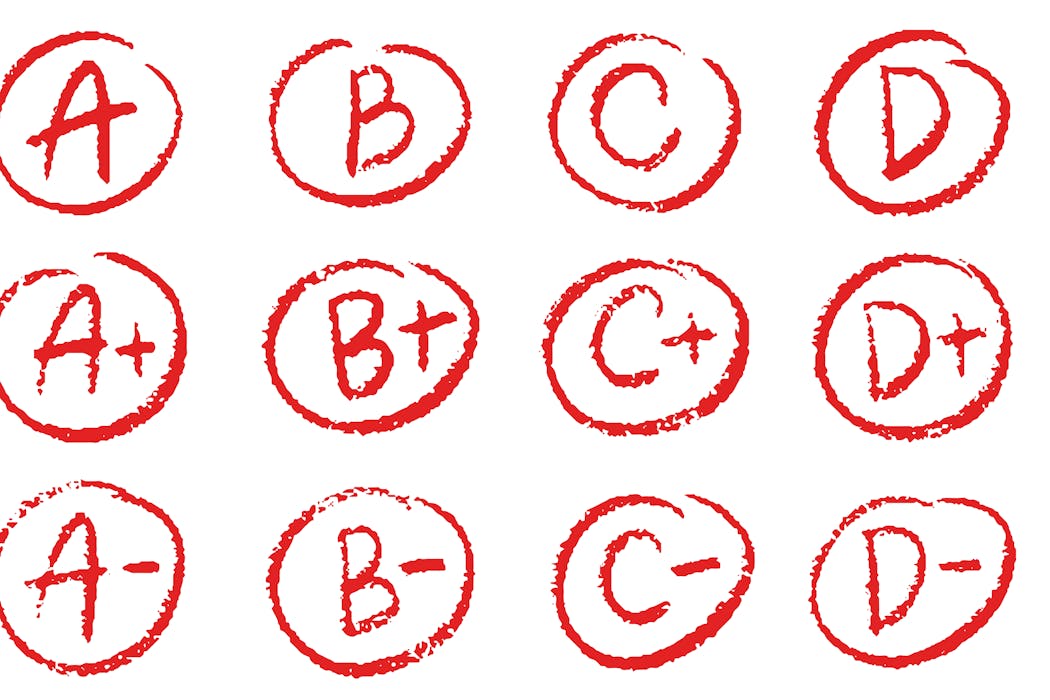
Grades are a standard part of the American educational system that most students and teachers take for granted.
But what if students didn’t have just one shot at acing a midterm, or even could talk with their teachers about what grade they should receive?
Alternative grading has existed in the U.S. for decades, but there are more educators trying out forms of nontraditional grading, according to Joshua Eyler, a scholar of teacher education. Amy Lieberman, education editor at The Conversation U.S., spoke with Eyler to better understand what alternative grading looks like and why more educators are thinking creatively about assessing learning.
Why are some scholars and educators reconsidering grading practices?
For more than 80 years, students at least in seventh grade through college in the U.S. have generally earned one grade for a particular assignment, and a student’s cumulative grades are then averaged at the end of the semester. The final grade gets placed on a student’s transcript.
In some ways, all of the attention is on the grade itself.
Some educators, including me, are trying to rethink the way we grade. Traditional grading is not always an accurate – or the best – way to demonstrate mastery and learning.
Many college faculty across the U.S., as well as some K-12 teachers and districts, are currently experimenting with different approaches and models of grading – typically doing this work on their own but sometimes also in coordination with their schools.

Shawn Patrick Ouellette/Portland Press Herald via Getty Images
Why is this idea now gaining steam?
Scholars have been researching grades for many decades – there are foundational papers from the early 20th century that scholars today still discuss.
More recently, alternative grading picked up steam in the past 15 to 20 years. Researchers like me have been focused on how grades affect learning.
Grades have been found to decrease students’ intrinsic motivation, and an overemphasis on grades has been shown to alter learning environments at all levels, leading to academic misconduct – meaning cheating.
Grades have also been shown to cultivate a fear of failure among students, at all ages, and inhibit them from taking intellectual risks and expressing creativity. We want students to be bold, creative thinkers and to try out new ideas.
Are there other challenges that alternative grading is trying to correct?
Grades mirror and magnify inequities that have always been a part of American educational systems.
Students who come from K-12 schools with fewer resources, for example, often do not have many textbooks. They often have few, if any, AP courses. These students can develop what researchers call “opportunity gaps.” They do not have the same educational opportunities that students at schools with more resources have.
When students from low-resourced high schools go to college, they can receive worse grades than kids who come from better-resourced schools receive – typically because of these opportunity gaps.
Some people would say that this means these students with low grades are not ready for college. In reality, the grades reflect these students’ past educational experiences – not their potential in college. Once those less-than-stellar grades appear on these students’ transcripts in their first and second years of college, it becomes really hard for students to hit milestones that they need to reach for particular majors.
If we thought about learning a bit differently, those students might have a better shot at reaching their goals.
What do alternative grading models look like in practice?
There are a lot of different grading approaches people are trying, but I would say in the past 10 to 15 years, the movement has really exploded and there is a lot of discussion about it throughout higher education.
With standards-based grading, a biology teacher, for example, would set out a certain number of content- and skill-based standards that they want students to achieve – like understanding photosynthesis. The student’s grade is based on how many of those standards they show competency in by the end of the semester.
A student could show competency in a variety of ways, like a set of exam questions, homework problems or a group project. It is not limited to one type of assessment to demonstrate learning. This grading approach acknowledges that learning is a deeply complicated process that unfolds at different rates for different students.
Other models could look like offering unlimited retakes on tests. Students may have to qualify for the retake by correcting all of the questions they got wrong on a previous exam. Or, teachers set up new assignments that draw on older standards students have previously met, so students have a second shot.
Portfolio-based grading is common in the arts and in writing programs. A student has a lot of time to turn in an assignment and then get feedback on it from their teacher – but no grade. The student eventually puts together a portfolio with the best of their assignments, and the portfolio as an entirety receives a grade.
Another method is called collaborative grading, or ungrading, where students don’t get grades throughout the semester. Instead, they get feedback from their teachers and complete self-assessments. At the end of the semester, the student and teacher collaboratively determine a grade.
What is stopping alternative grading from becoming more widespread?
There have been bursts of activity with grading reform over the past 100 years. The 1960s are a great example of such a period of activity. This is when gradeless colleges like The Evergreen State College were founded.
Social media has helped this particular recent iteration gain traction, as educators can more easily communicate with other people who are grading in different ways.
We are seeing the beginnings of a movement where individuals are trying to do something on this issue. But the issue has not yet drawn together coalitions of people who agree they want change on grading.
Alternative forms of grading have caught on in some private schools, and they have not gained traction in other private schools. The same is true with public schools. Some challenges include logistical support from administrations in K-12 and colleges, teacher buy-in and parental support – especially in K-12 settings.
There is nothing more baked into the fabric of education than the idea of grades. Talking about reforming grading shakes this foundation a little, and that is why it is important to discuss what the alternatives are.

Joshua Rowe Eyler does not work for, consult, own shares in or receive funding from any company or organization that would benefit from this article, and has disclosed no relevant affiliations beyond their academic appointment.