
Miami’s new mayor faces a housing affordability crisis, city charter reform and a shrinking budget
- Miami’s new mayor, Eileen Higgins, faces several key challenges, including addressing the city’s housing affordability crisis, reforming the city charter, and managing a shrinking budget.
- The city’s housing market is at risk of a bubble, with high prices unaffordable for middle- and working-class families, and Higgins has proposed forming a city-run housing trust fund and dedicating city-owned land to affordable housing projects.
- Higgins also plans to minimize Miami’s involvement in immigration enforcement, which was a contentious issue during her campaign, and will need to navigate the city’s finances, including a proposal to eliminate property taxes in 2026.
- The city charter reform agenda includes moving elections from odd to even years and potentially increasing the size of the City Commission, both of which would require voter approval.
- Higgins’ leadership style is expected to be different from her predecessor’s, with a focus on civility and compassion, and she will need to work with commissioners to pass budget proposals and address other key issues facing the city.
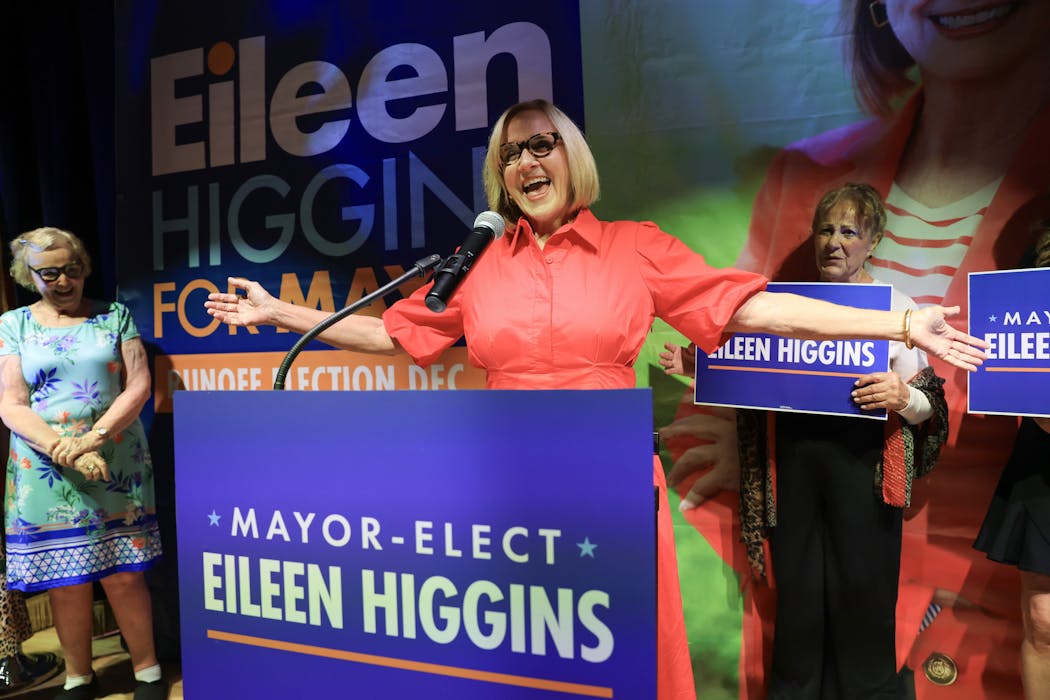
After its first competitive mayoral election in 20 years, the city of Miami has a new mayor: former Miami-Dade County commissioner Eileen Higgins.
During the heated campaign, both national political parties were active in organizing voters and providing resources. Many high-profile politicians weighed in with endorsements and visits. Notably, Republicans President Donald Trump and Gov. Ron DeSantis endorsed Higgins’ opponent, Emilio Gonzalez. Meanwhile, Democrats Ruben Gallego – a senator from Arizona – and former Transportation Secretary Pete Buttigieg supported Higgins.
Still, Miami’s mayoralty is officially a nonpartisan position. And as the saying goes, there are no Democratic or Republican potholes; they are all of local concern.
I’m a political scientist with a particular interest in local government, and I’ve lived in the Greater Miami area for 30 years.
So what are the “potholes” confronting Miami’s new mayor?
Civility on the dais
Former Mayor Francis Suarez has a charismatic persona, but was not a forceful presence on the dais. During his tenure, City Commission meetings turned into spectacles, with shouting matches, name-calling,
and allegations of corruption.
Higgins, a bilingual, soft-spoken policy wonk, has promised to set a new tone, leading with civility and compassion. The day after the election, she reiterated that promise: “The era of commissioners yelling at one another and threatening to punch one another is going to stop.”
Affordable housing
Affordability and the cost of living were the major substantive campaign issues, with the cost of housing topping the list.
For the second year in a row, the financial services firm UBS lists Miami as the city at highest risk for a housing bubble. Another study ranked the Miami metro area as the least affordable housing market nationally.

Joe Raedle/Getty Images News via Getty Images North America
The good news: This rise in price appears to be fueled by a strong employment market. But the shortage of housing priced for middle- and working-class families is unsustainable.
While housing supply and prices are largely determined by market forces, government officials can set conditions to promote targeted investments. Higgins has suggested forming a city-run housing trust fund, similar to Miami-Dade County. She has also proposed dedicating city-owned land to affordable housing projects and reforming the city’s permit process.
Charter reform
Charter reform issues, including moving city elections from odd to even years to align with national elections, are on the agenda. Though a court deemed the City Commission’s attempt to move this year’s election invalid, Higgins said she supports moving the election date, pledging to cut her term short to facilitate. This change would require commissioners to hold a referendum and voters to support it.
There also is a debate about changing the size of the City Commission from five to seven or nine commissioners. Higgins supported this idea, noting that other Florida cities the size of Miami have larger commissions. This charter change would also require voter approval, but needs the commission to act or for citizens to initiate the process. The mayor’s role would be to advocate for the need for greater representation of neighborhoods and government responsiveness.
Immigration enforcement
In a city where nearly 60% of the population is foreign-born, immigration issues loom large.
In June 2025, after a contentious meeting, the commission voted 3-2 to approve a 287(g) agreement with Immigration and Customs Enforcement, or ICE, to aid Trump’s enforcement measures.
While Higgins cannot remove the city from the agreement, she plans to minimize Miami’s involvement with immigration enforcement. “There’s no reason in the city of Miami that our police department should be in the job of federal immigration enforcement,” she told the press.
City finances
Municipal budgets have been squeezed by state policies and state Department of Government Efficiency efforts. Recent federal cuts to social service and transportation grants have exacerbated the problem.
Now, state leaders are proposing to eliminate property taxes in 2026, further straining local coffers. Public spending will need to be reduced, or revenues replaced. The mayor makes budget proposals, but it is commissioners who approve them. Higgins will need to lead through persuasion and clear explanations.

Sean Foreman does not work for, consult, own shares in or receive funding from any company or organization that would benefit from this article, and has disclosed no relevant affiliations beyond their academic appointment.