
School shootings dropped in 2025 – but schools are still focusing too much on safety technology instead of prevention
- Despite a decline in school shootings in 2025, schools are still prioritizing safety technology over prevention measures, which may not be effective in addressing the root causes of violence.
- The majority of school shooters (around 90%) are current or former students at the school, making traditional security measures like cameras and metal detectors less effective in preventing attacks.
- Schools are being asked to solve a societal gun violence problem that they didn’t create and can’t control, leading to an “impossible mandate” for educators who are expected to be teachers, social workers, threat assessors, and first responders all at once.
- Behavioral threat assessment and management is a key strategy for preventing school shootings, as it involves identifying signs of crisis or withdrawal in students and providing early intervention and support to prevent harm before it occurs.
- The most effective way to prevent school shootings may involve creating human systems that get upstream of the problem, rather than just relying on technology or security measures, which can help address underlying issues like mental health, social isolation, and community violence.
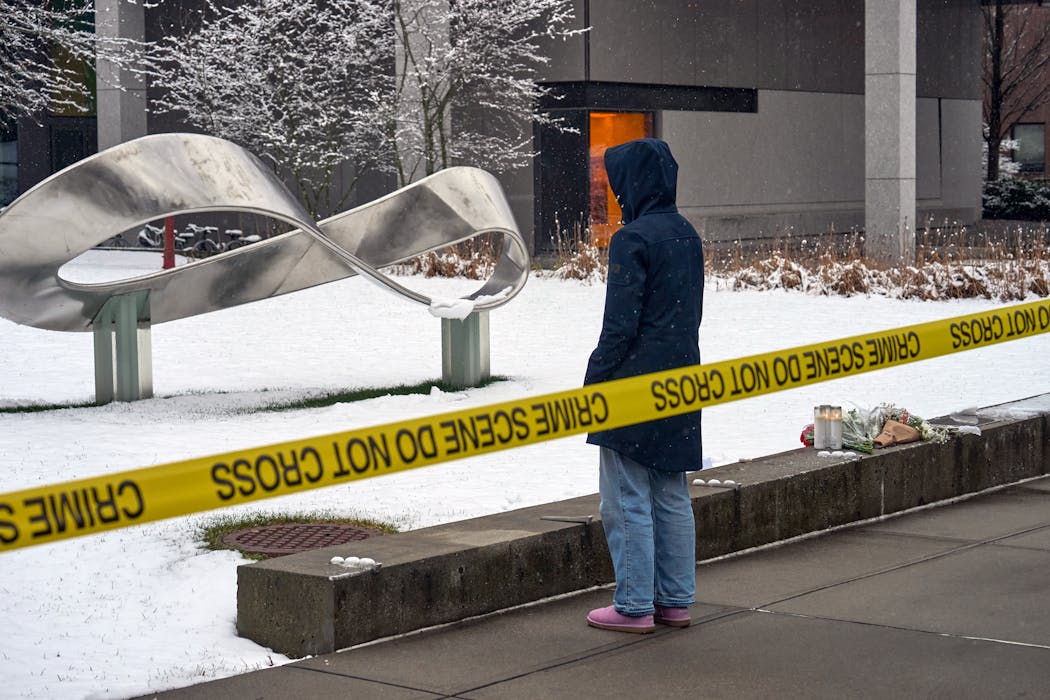
Active shootings represent a very small percentage of on-campus university violence.
But among those that do happen, there are patterns. And as law enforcement officials continue to investigate the Dec. 13, 2025, Brown University shooting, similarities can be seen with other active shooter cases on college campuses that scholar James Densley has studied. “They tend to happen inside a classroom, and there tends to be multiple victims,” Densley explains.
The Brown University tragedy, in which a shooter killed two students and injured nine more, marks the fourth deadly shooting at a U.S. university in 2025.
The Department of Education in Rhode Island, where Brown University is located, said on Dec. 16 that it is urging local elementary and secondary schools to review safety protocols.
Amy Lieberman, the education editor at The Conversation U.S., spoke with Densley about how schools have been given what he describes as an “impossible mandate” to try to prevent shootings.
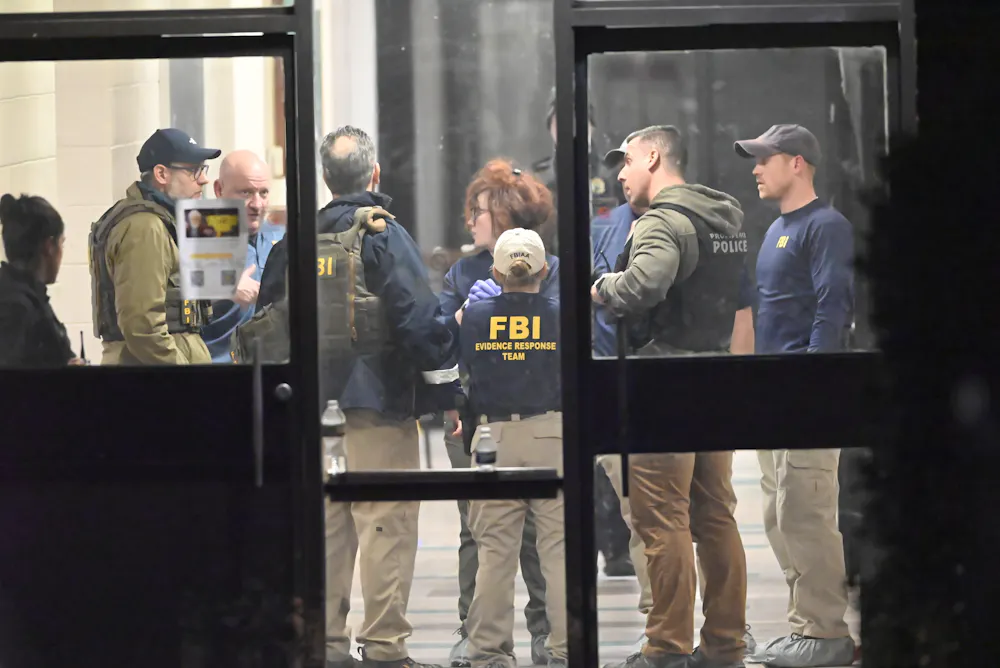
Kyle Mazza/Anadolu via Getty Images
What is the overall trajectory of school shootings over the past few years?
K-12 school shootings appear to be trending downward, at least in the past two years. But we actually saw the largest jumps in this type of violence in the three to five years leading up to 2024, which trends closely with the broader rise in homicide and violent crime we saw in the pandemic era.
In 2025, there have been 230 school shooting incidents in the U.S. – still a staggeringly high number. This compares with 336 school shootings in 2024, 352 in 2023, 308 in 2022, and 257 in 2021.
How this relates to an increase in schools trying to institute security measures to prevent shootings is an open question. But it’s true that many schools are experimenting with certain solutions, like cameras, drones, AI threat detection, weapons scanners, panic apps and facial recognition, even if there is only weak or emerging evidence about how well they work.
Schools are treated as the front line, because the larger, structural solutions are too difficult to confront. It is much easier to blame schools after a tragedy than to actually address firearm access, grievance pathways – meaning how a person becomes a school shooter – and the other societal problems that are creating these tragedies.
How have schools responded to the rise of school shootings in recent years?
Schools are being asked to solve a societal gun violence problem that they didn’t create and they cannot control. Even the best-run school cannot eliminate all risks when causes accumulate outside of their purview. These attacks are rare but catastrophic, and they create an impossible mandate for schools because when they occur, schools are told it reflects a failure in their preparation. Educators are expected to be teachers, social workers, threat assessors and first responders. It normalizes fear and shifts the responsibility downward.
There is a growing school safety industry that markets fear as a solvable, technical problem. It promises faster ways to detect weapons, for example, but the evidence base for those products is thin, proprietary or nonexistent. One example is an AI detection software that mistook a bag of Doritos for a gun, resulting in a large police response.
Schools are pressured to buy something from these companies to show they are doing something. But some of these systems create false positives, and, more importantly, they shift attention away from human relationships. Technology alone cannot resolve grievances, replace trust and create belonging, but most schools are focused on technology as a means of prevention.
How effective are other prevention systems schools have put in place?
If a school shooter is an outsider trying to attack the building, having a single point of entry, access control or multiple locks on doors creates time and space, which are essential for delaying an attacker until law enforcement can arrive, thus mitigating casualties.
But the evidence shows that nearly all school shooters are either current or former students at the school. They are very familiar with entry and exit points, and they are potentially already inside the building before the school can act on a potential threat of violence.
So, what happens if a school locks down, but you are actually locking the shooter in a room with their potential victims? What if students are forced to hide when it would be safer to run? What if you have a door that locks only from the inside and a student or staff member uses that room to bully or sexually assault another student? We’re building schools to protect against the rare events, but we are not mitigating the more common problems they face.
Students are being asked to practice preventing their own deaths in active shooter drills and learn in environments designed around worst-case scenarios. In general, interpersonal violence and spillover of community violence, like gang-related shootings, are the most common form of school shooting. Most shootings at schools occur in parking lots or at sports events, but we do very little to prepare for those types of scenarios.
Are there any benefits, then, to schools having certain non-tech safety measures in place, like making sure every person has an ID?
Of course, you don’t want strangers walking around in a school building. The fact that someone coming to the school has to get their ID scanned and wear a badge makes perfect sense, not just to prevent shootings but to also prevent theft and assaults and other risks.
The paradox is that school shooters tend to be children already affiliated with the school, and when someone walks in already firing, checkpoints and metal detectors are useless. Historically, several mass shootings in K-12 schools have started outside of the building then moved inside. The issue is not slipping past barriers but overwhelming them in seconds with irresistible force.

Ben Pennington/The Boston Globe via Getty Images
Absent policy change, what is the clearest way to prevent school shootings, according to current evidence?
Evidence shows that we often see signs of a crisis or withdrawal beforehand from school attackers. And that is why school-based behavioral threat assessment and management is so important. It is really about noticing changes in behavior and having the authority to intervene early. This is not about profiling people or relying on law enforcement alone. It is about having a structured, team-based process for identifying concerning behavior, assessing risk and coordinating appropriate supports – such as counseling – to prevent harm before it occurs. So often in these cases, people had a gut feeling that something was off with a particular student, but they didn’t know what to share or who to share it with.
For decades we’ve invested far more in responding to school shootings once they occur rather than in preventing them. You can lock doors and run drills, but no school can become a fortress.
Attackers leak warning signs in advance. Real prevention is about creating human systems that get upstream of this.

James Densley has received funding from the National Institute of Justice, the Joyce Foundation, and the Sandy Hook Promise Foundation.