
Chemicals in flame retardant gear could put firefighters at risk
- Firefighters’ protective gear may contain harmful chemicals that could put their health at risk.
- A new study found that some flame retardant gear contains brominated flame retardants (BFRs), which have been linked to thyroid problems and other health issues.
- The study tested gear made between 2013 and 2020, including newer gear advertised as non-PFAS treated, and found BFRs in all of them, with higher levels in the newer gear.
- Although suppliers now offer PFAS-free gear, researchers are calling for more research into the use of other chemicals like BFRs in turnout gear and greater transparency from manufacturers.
- The study’s lead author, Heather Stapleton, is urging fire departments to prioritize firefighter safety and protection, as these first responders are a critical component of public safety.
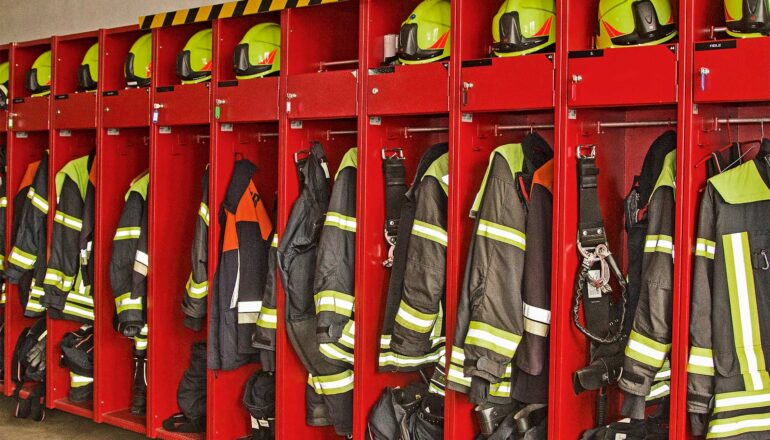
A new study has found that some protective gear worn by firefighters contains chemicals that could be harmful to their health.
Firefighters wear special clothing called “turnout gear,” which is made of textiles treated with chemicals to protect them from extreme conditions on the job.
The study, conducted by Heather Stapleton, an environmental chemist at Duke University’s Nicholas School of the Environment, was published in Environmental Science & Technology Letters.
For years, firefighters have worried about PFAS—chemicals used to make gear water- and oil-resistant.
These chemicals have been linked to health conditions such as cancer, thyroid disease, and neurodevelopmental problems. Although no direct link has been found between the use of PFAS-treated gear and PFAS in blood, many gear manufacturers are phasing out these chemicals.
This shift away from PFAS has raised questions about gear safety. Stapleton and her team suspected that manufacturers might be using brominated flame retardants (BFRs)—some of which are known to be toxic—in these textiles. They tested gear made between 2013 and 2020, and newer gear from 2024 advertised as non-PFAS treated. While they found PFAS in older gear, they identified only trace amounts in the newer gear that likely stemmed from environmental exposure.
However, all gear tested contained BFRs, with the highest levels in the newer gear that had not been treated with PFAS. The most prevalent BFR, decabromodiphenyl ethane, has been linked to thyroid problems.
Although suppliers now offer gear without PFAS, Stapleton and her team call for more research into the use of other chemicals like BFRs in turnout gear. They also urge more transparency from manufacturers to help inform fire departments and protect firefighters.
“These first responders are a critically important component of our public safety and deserve to be respected and protected,” says Stapleton, who also leads another study investigating cancer risk among firefighters.
Source: Duke University
The post Chemicals in flame retardant gear could put firefighters at risk appeared first on Futurity.