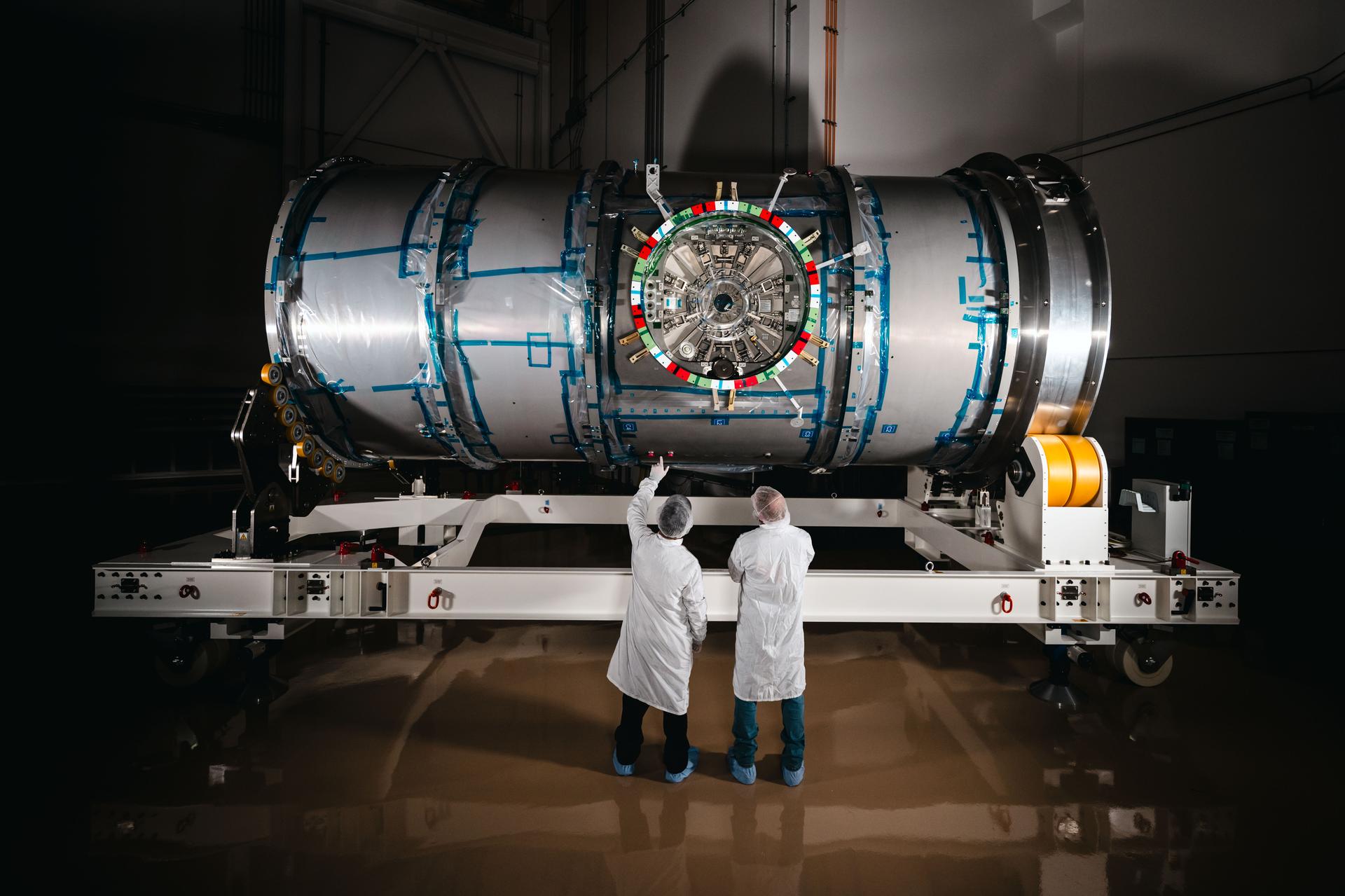
NASA Starts Up Gateway’s Power System for First Time
- NASA has successfully powered on the Power and Propulsion Element (PPE) of the Gateway space station for the first time, demonstrating its ability to generate power, high-rate communications, attitude control, and maneuver between orbits.
- The PPE, managed by NASA’s Glenn Research Center in Cleveland, is a solar electric propulsion spacecraft designed to provide power for the Gateway in lunar orbit, with an output of 60 kilowatts of power.
- Development on the PPE is being carried out by industry partner Lanteris Space Systems in Palo Alto, California, where teams have secured the element’s main electrical system inside protective exterior panels.
- The roll-out solar arrays for Gateway are complete and moving through testing at Redwire’s facility in Goleta, California, while three 12-kilowatt advanced electric propulsion system thrusters and four 6-kilowatt Busek-built BHT-6000 thrusters are being installed on the PPE.
- The successful powering on of the PPE marks an important milestone for NASA’s Gateway program, which aims to establish a sustainable human presence in lunar orbit by the mid-2020s.
1 min read
Preparations for Next Moonwalk Simulations Underway (and Underwater)
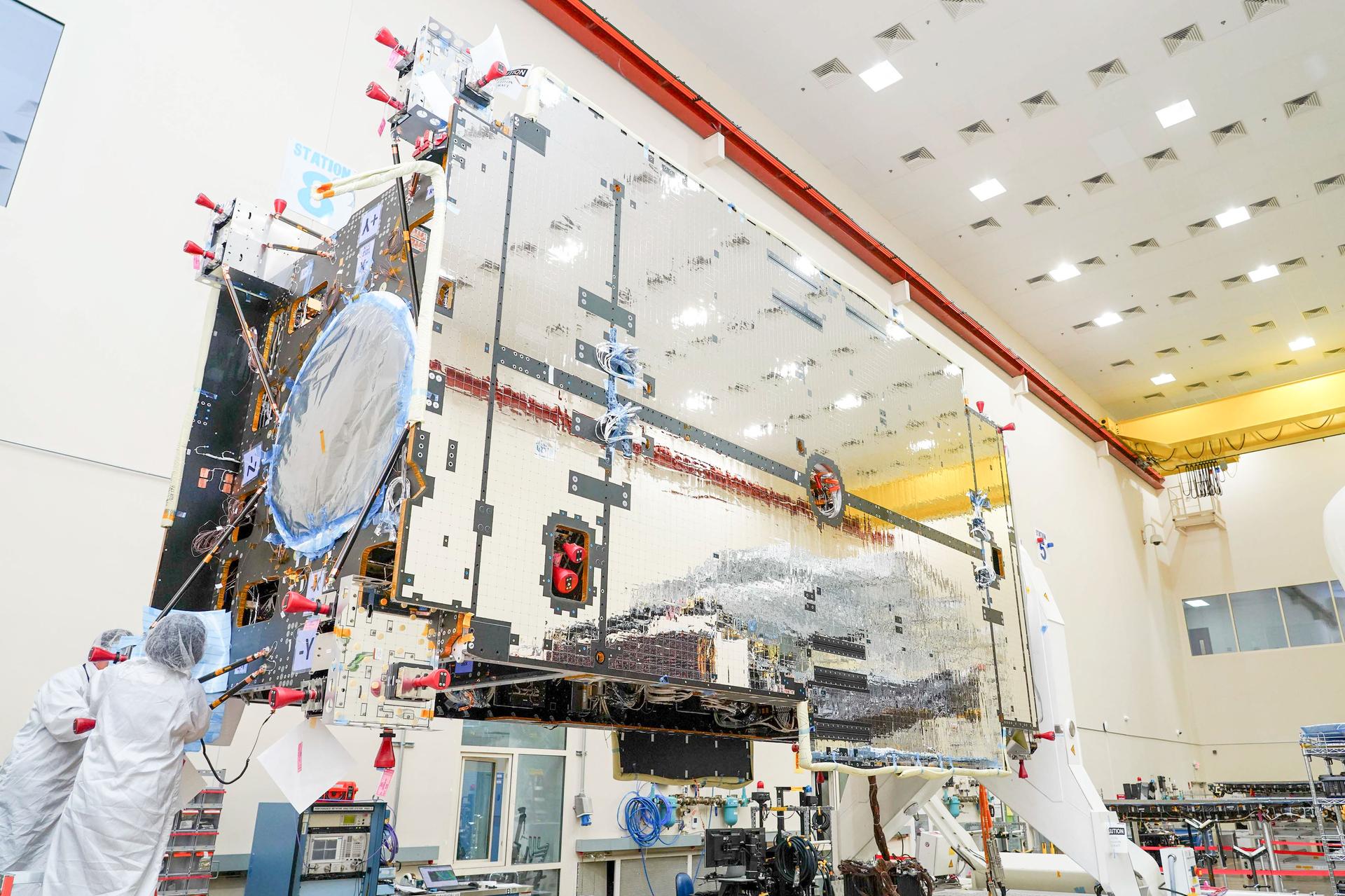
Development continues on NASA’s Power and Propulsion Element, a solar electric propulsion spacecraft designed to provide power for Gateway in lunar orbit.
Able to generate 60 kilowatts of power, the element was successfully powered on earlier last year. The milestone demonstrates the element can provide the spacecraft with power, high-rate communications, attitude control, as well as the ability to maintain and maneuver between orbits.
The Power and Propulsion Element is managed by NASA’s Glenn Research Center in Cleveland and built by industry partner Lanteris Space Systems in Palo Alto, California, where teams have secured the element’s main electrical system inside protective exterior panels. On deck for installation at Lanteris Space Systems are three 12-kilowatt advanced electric propulsion system thrusters, manufactured by L3Harris, and four 6-kilowatt Busek-built BHT-6000 thrusters. The roll-out solar arrays for Gateway are complete and moving through testing at Redwire’s facility in Goleta, California.
For more information about NASA’s lunar exploration missions, visit: