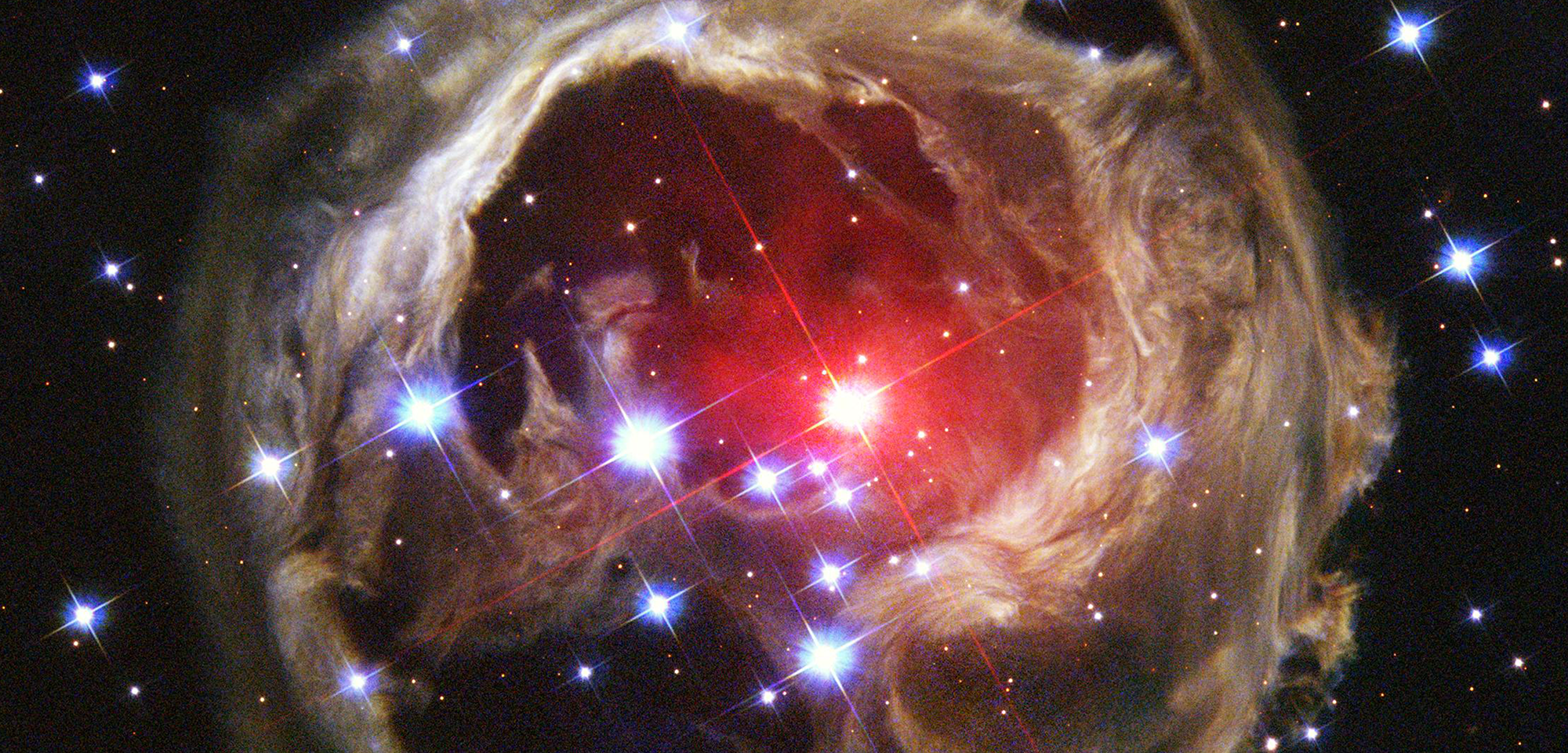
Hubble Observes Ghostly Cloud Alive with Star Formation
- Hubble Space Telescope has captured an image of Lupus 3, a star-forming cloud 500 light-years away in the constellation Scorpius, revealing new life amidst its eerie landscape.
- The image shows white wisps of gas swirling throughout the region, including a dark dust cloud and bright T Tauri stars that are actively forming stars in a specific stage of formation.
- T Tauri stars are typically less than 10 million years old and vary in brightness due to environmental factors and the nature of their formation process, providing valuable insights into the star formation process.
- Studying these stars can help astronomers better understand how stars contract under gravity and fuse hydrogen to helium in their cores, shedding light on the birth of new stars.
- New images of young stellar objects are being added daily between January 12-17, 2026, and can be followed on social media using @NASAHubble for the latest Hubble images and news.
2 min read
Hubble Observes Ghostly Cloud Alive with Star Formation

While this eerie NASA Hubble Space Telescope image may look ghostly, it’s actually full of new life. Lupus 3 is a star-forming cloud about 500 light-years away in the constellation Scorpius.
White wisps of gas swirl throughout the region, and in the lower-left corner resides a dark dust cloud. Bright T Tauri stars shine at the left, bottom right, and upper center, while other young stellar objects dot the image.
T Tauri stars are actively forming stars in a specific stage of formation. In this stage, the enveloping gas and dust dissipates from radiation and stellar winds, or outflows of particles from the emerging star. T Tauri stars are typically less than 10 million years old and vary in brightness both randomly and periodically due to the environment and nature of a forming star. The random variations may be due to instabilities in the accretion disk of dust and gas around the star, material from that disk falling onto the star and being consumed, and flares on the star’s surface. The more regular, periodic changes may be caused by giant sunspots rotating in and out of view.
T Tauri stars are in the process of contracting under the force of gravity as they become main sequence stars which fuse hydrogen to helium in their cores. Studying these stars can help astronomers better understand the star formation process.
New images added every day between January 12-17, 2026! Follow @NASAHubble on social media for the latest Hubble images and news and see Hubble’s Stellar Construction Zones for more images of young stellar objects.
Explore More
Media Contact:
Claire Andreoli
NASA’s Goddard Space Flight Center, Greenbelt, MD
claire.andreoli@nasa.gov