NASAxA0Adds Two F-15 Aircraft to Support Supersonic Flight Research
- NASA has added two retired F-15 aircraft to its flight research fleet at Armstrong Flight Research Center in Edwards, California, to support supersonic flight research.
- The F-15s will be used for testing the X-59 quiet supersonic research aircraft and enabling successful data collection and chase plane capabilities through the life of the Low Boom Flight Demonstrator project.
- The aircraft were previously flown by the Oregon Air National Guard’s 173rd Fighter Wing and have been modified to support flight research, including installing instruments and experiments that would not fit on other aircraft.
- The F-15s will enable NASA to operate in high-speed, high-altitude flight-testing environments and resume operations with external partners, including the Department of War and commercial aviation companies.
- The priority is for the new F-15 to successfully support the X-59 mission, while also positioning NASA to continue supporting advanced aeronautics research and partnerships over the longer term.
3 min read
Preparations for Next Moonwalk Simulations Underway (and Underwater)
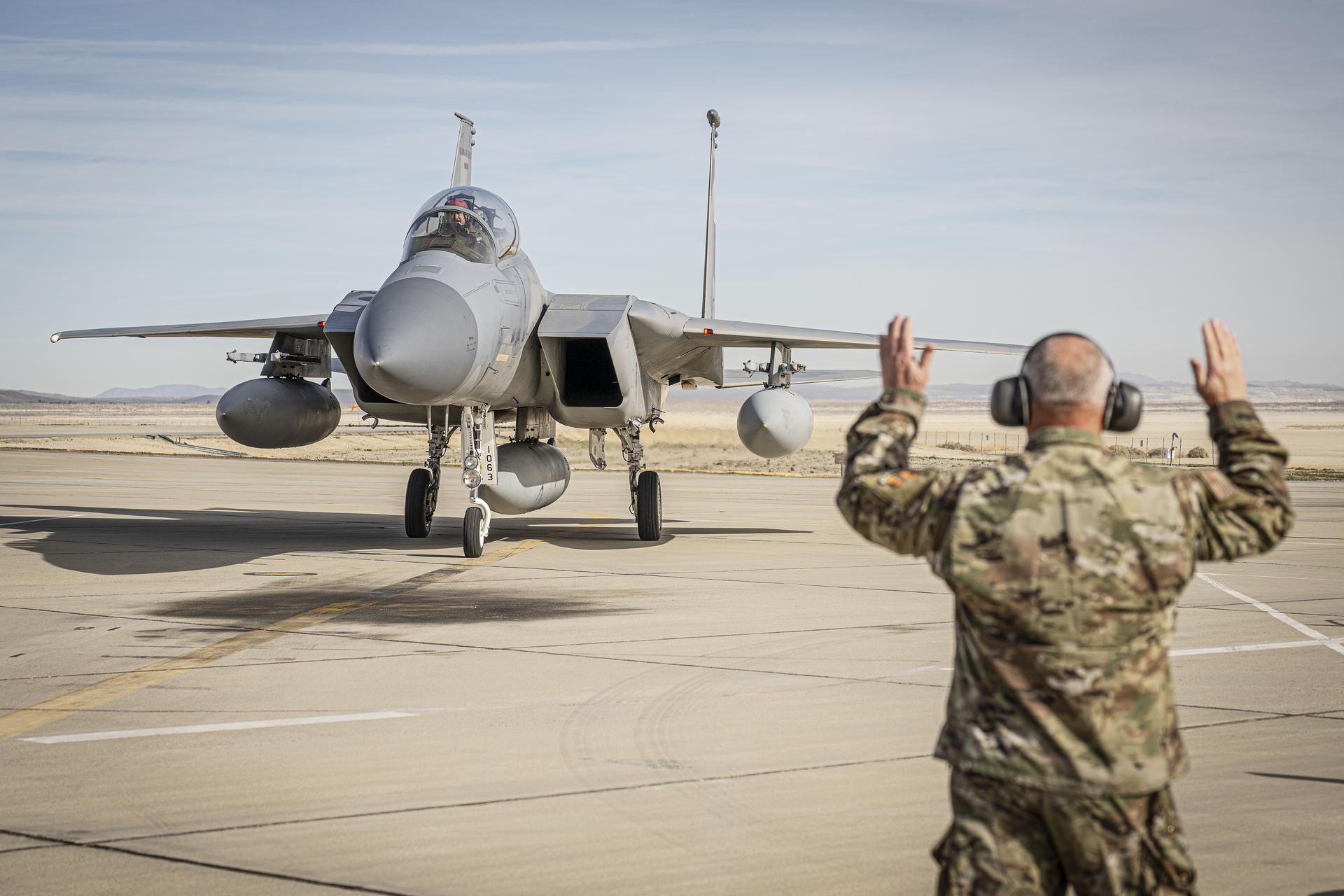
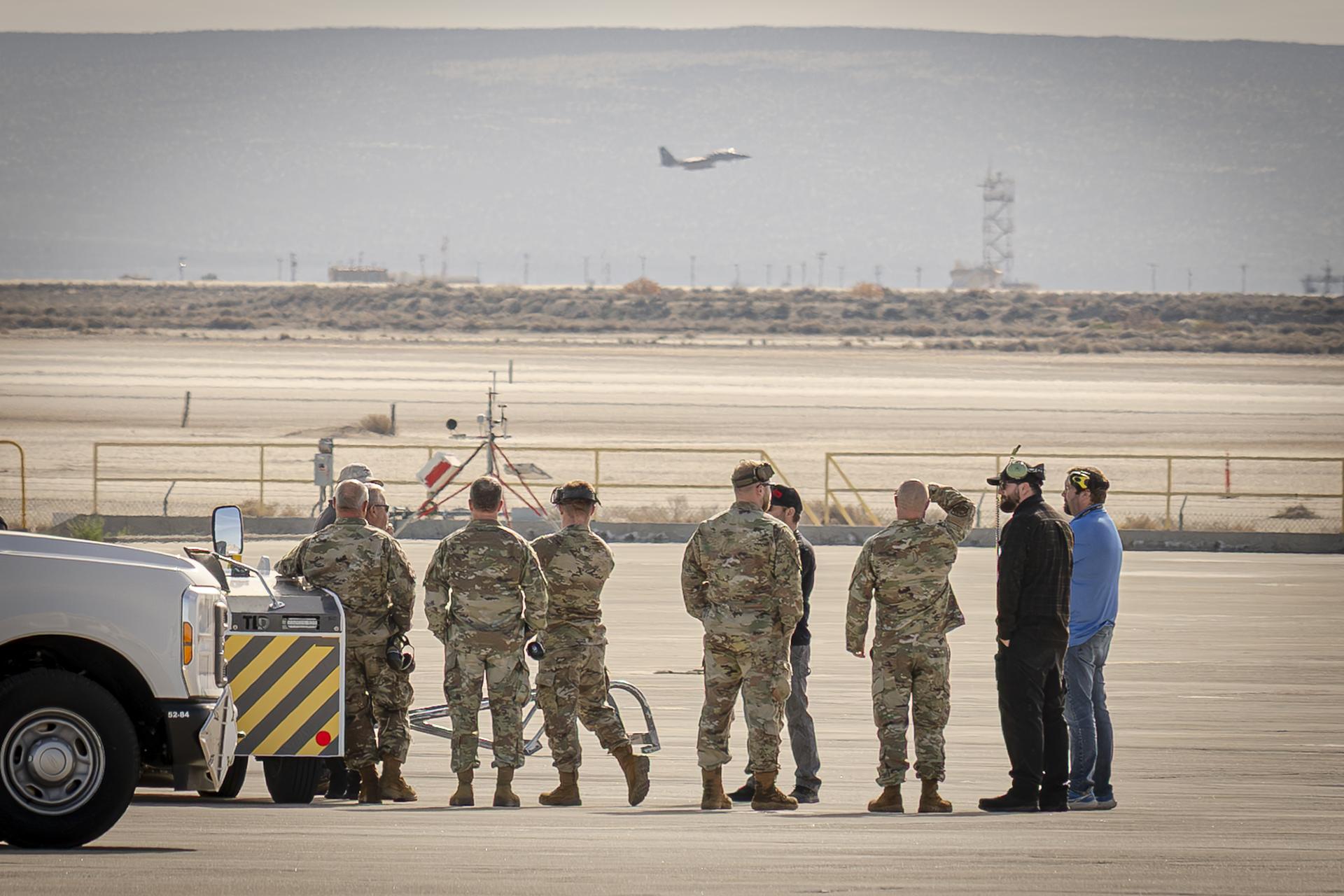
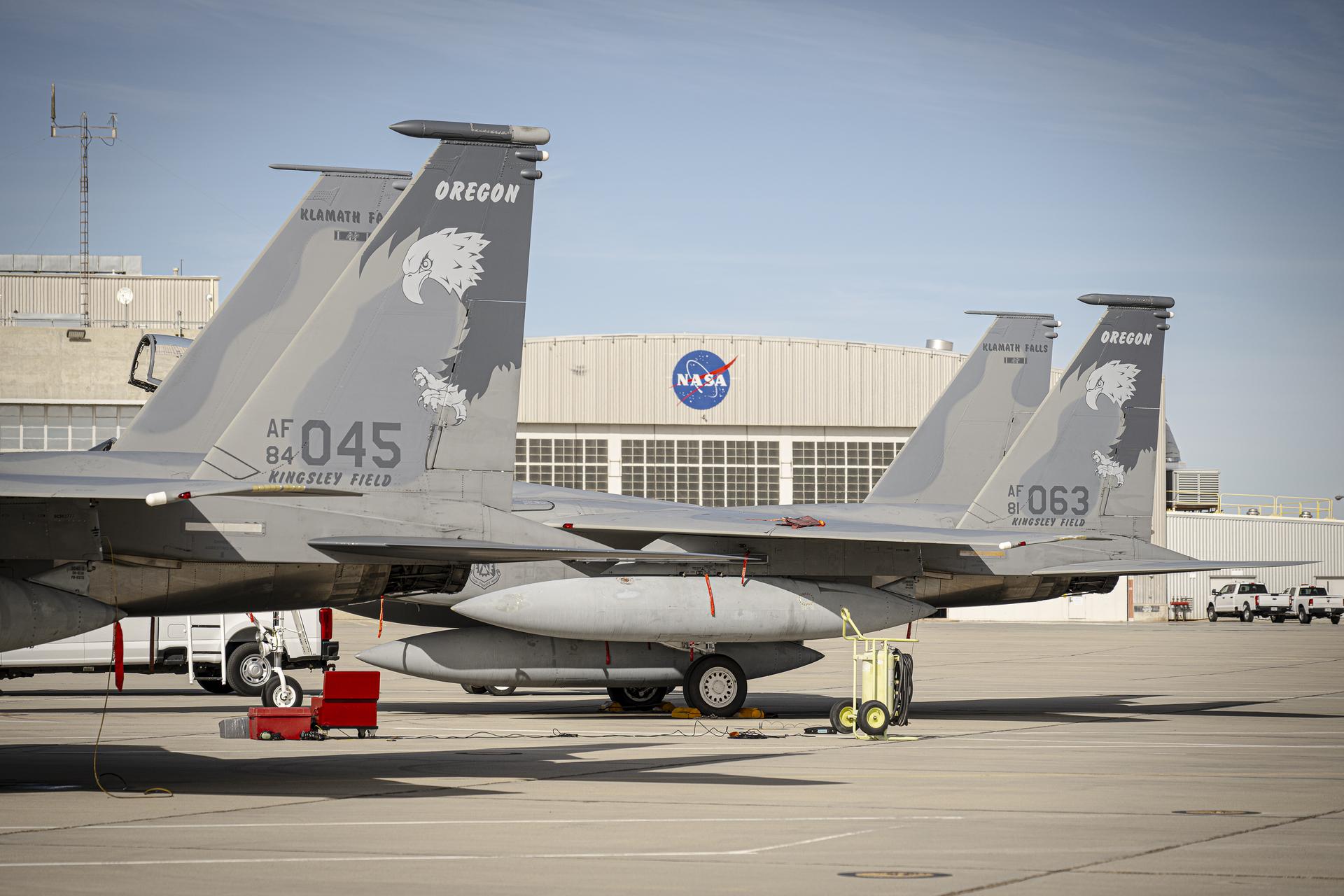
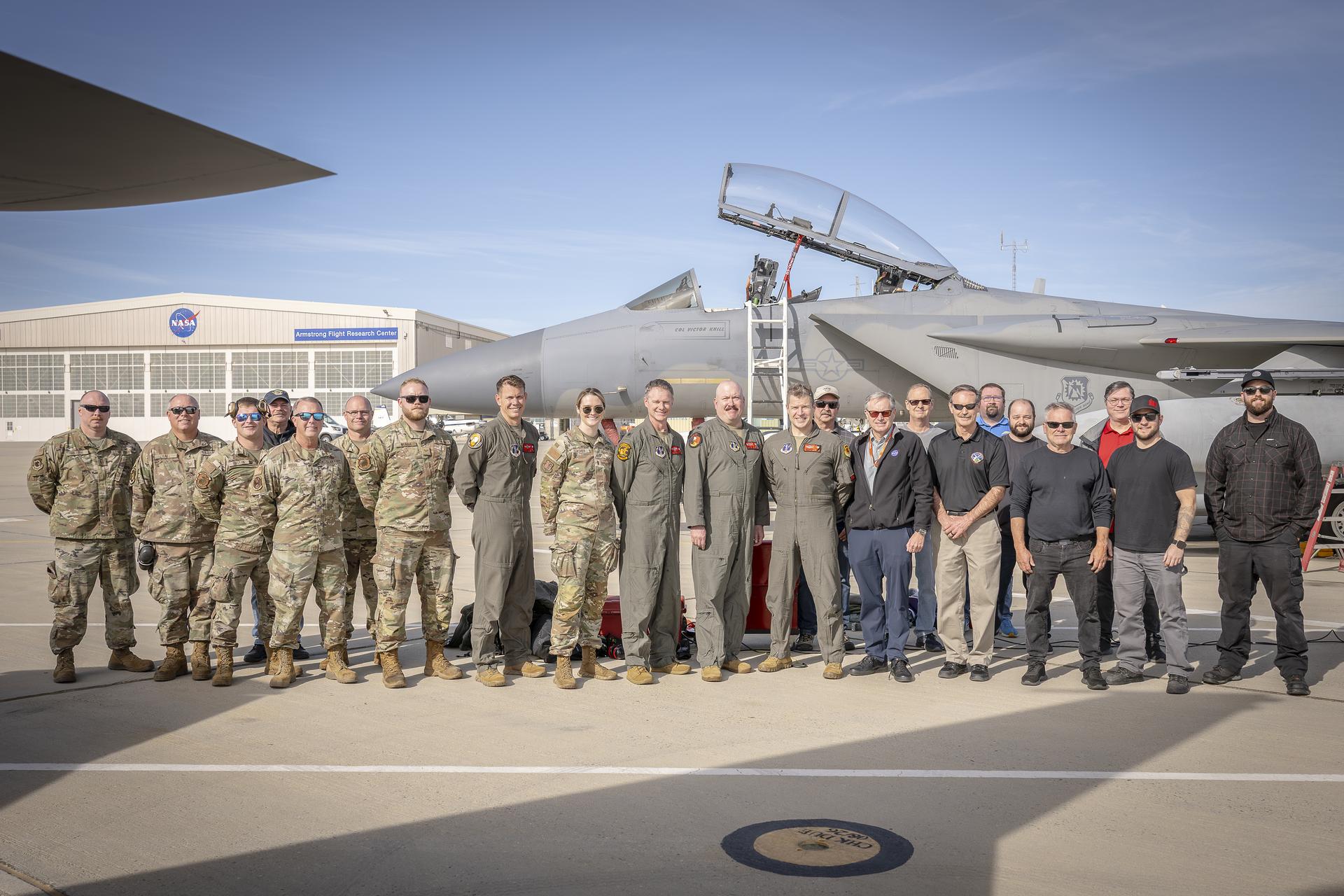
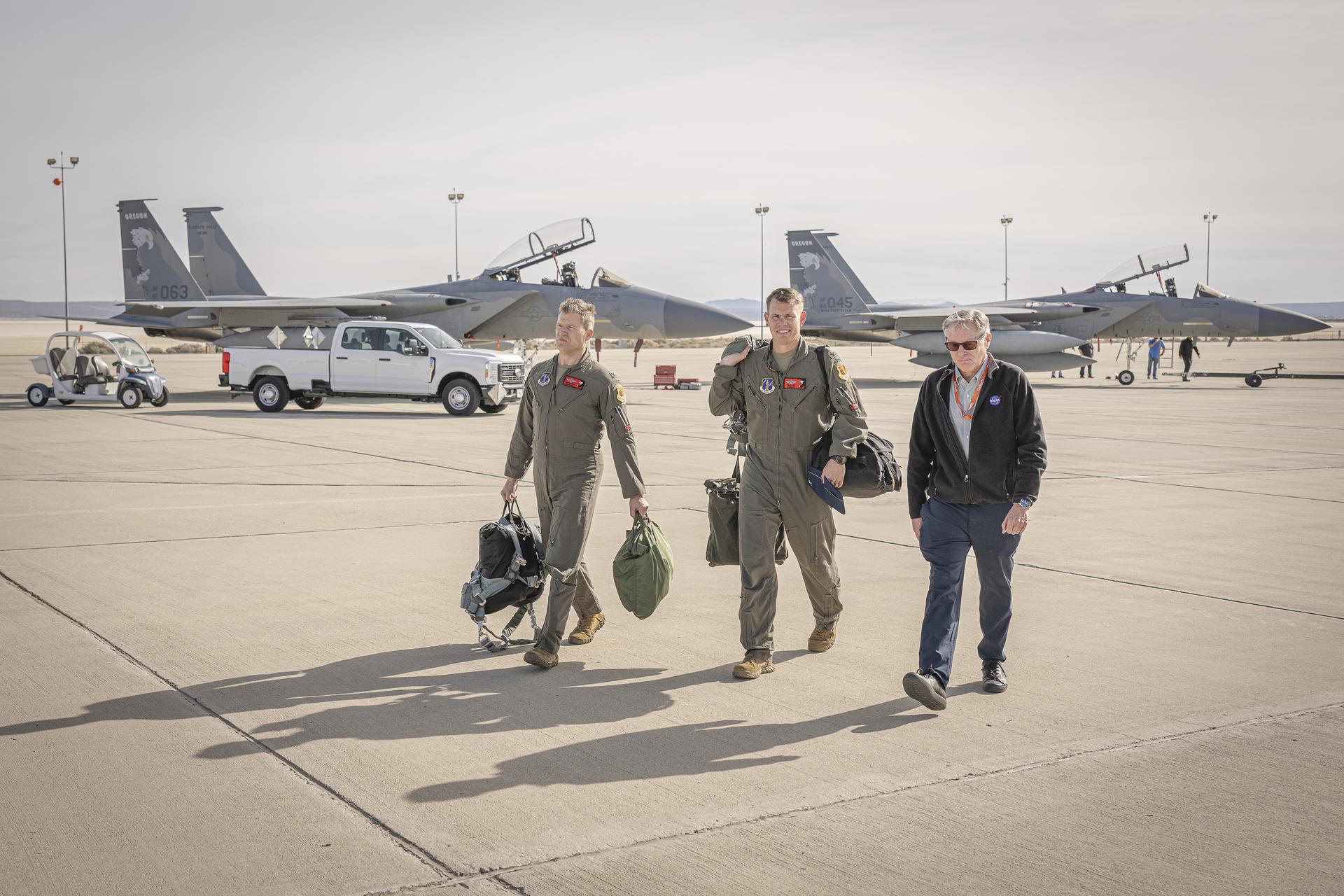
Two retired U.S. Air Force F-15 jets have joined the flight research fleet at NASA’s Armstrong Flight Research Center in Edwards, California, transitioning from military service to a new role enabling breakthrough advancements in aerospace.
The F-15s will support supersonic flight research for NASA’s Flight Demonstrations and Capabilities project, including testing for the Quesst mission’s X-59 quiet supersonic research aircraft. One of the aircraft will return to the air as an active NASA research aircraft. The second will be used for parts to support long-term fleet sustainment.
“These two aircraft will enable successful data collection and chase plane capabilities for the X-59 through the life of the Low Boom Flight Demonstrator project” said Troy Asher, director for flight operations at NASA Armstrong. “They will also enable us to resume operations with various external partners, including the Department of War and commercial aviation companies.”
The aircraft came from the Oregon Air National Guard’s 173rd Fighter Wing at Kingsley Field. After completing their final flights with the Air Force, the two aircraft arrived at NASA Armstrong Dec. 22, 2025.
“NASA has been flying F-15s since some of the earliest models came out in the early 1970s,” Asher said. “Dozens of scientific experiments have been flown over the decades on NASA’s F-15s and have made a significant contribution to aeronautics and high-speed flight research.”
The F-15s allow NASA to operate in high-speed, high-altitude flight-testing environments. The aircraft can carry experimental hardware externally – under its wings or slung under the center – and can be modified to support flight research.
Now that these aircraft have joined NASA’s fleet, the team at Armstrong can modify their software, systems, and flight controls to suit mission needs. The F-15’s ground clearance allows researchers to install instruments and experiments that would not fit beneath many other aircraft.
NASA has already been operating two F-15s modified so their pilots can operate safely at up to 60,000 feet, the top of the flight envelop for the X-59, which will cruise at 55,000 feet. The new F-15 that will fly for NASA will receive the same modification, allowing for operations at altitudes most standard aircraft cannot reach. The combination of capability, capacity, and adaptability makes the F-15s uniquely suited for flight research at NASA Armstrong.
“The priority is for them to successfully support the X-59 through completion of that mission,” Asher said. “And over the longer term, these aircraft will help position NASA to continue supporting advanced aeronautics research and partnerships.”