
Red, Green Light Show
- Auroras, also known as the northern or southern lights, are colorful displays caused by particles from space colliding with Earth’s atmosphere.
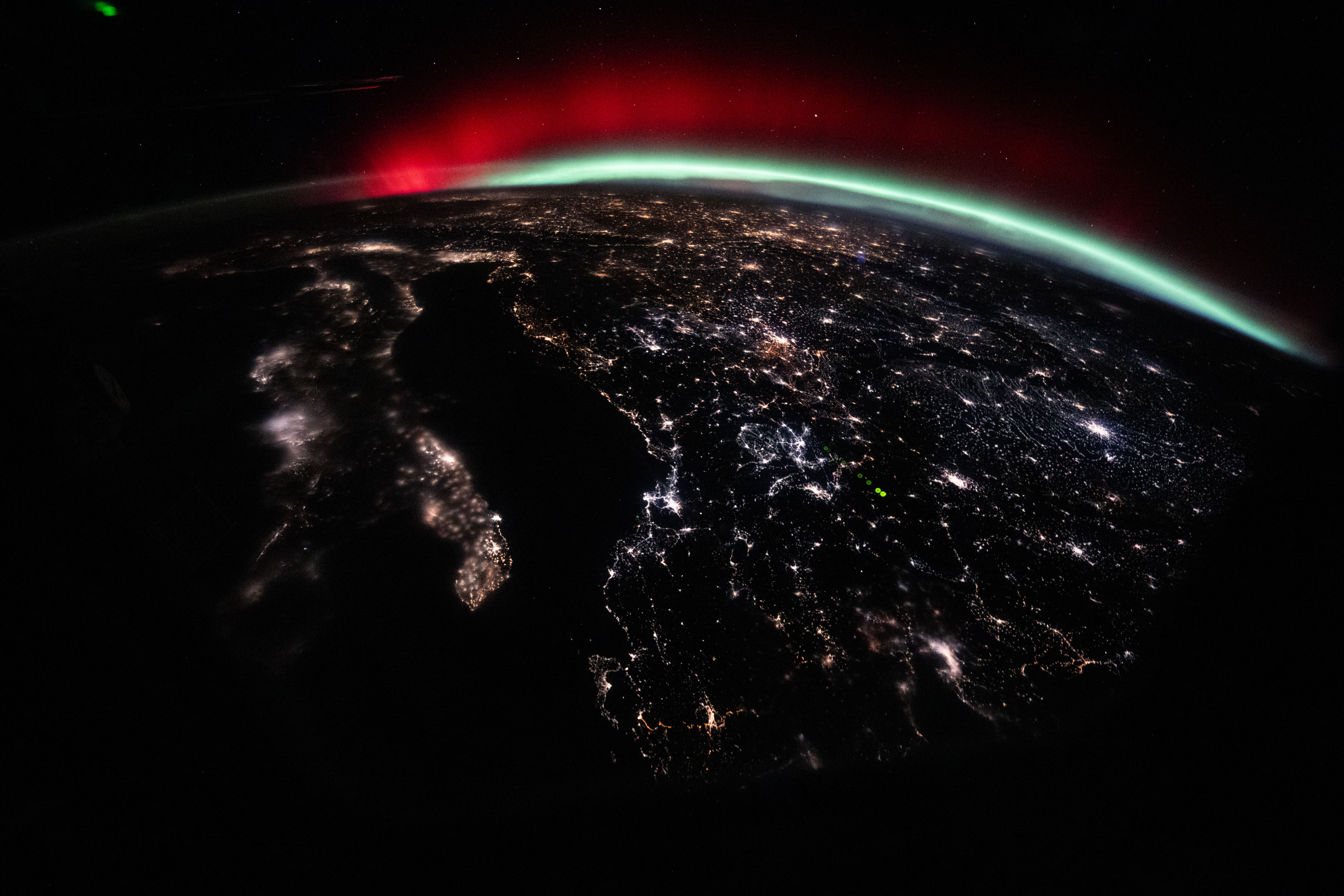
- The International Space Station was orbiting above the Mediterranean Sea when this photo was taken on Jan. 19, 2026, capturing a stunning green and red aurora over Europe.
- Auroras occur when energetic particles from space interact with atoms and molecules in the atmosphere, resulting in a colorful glow.
- The phenomenon is also known as the aurora borealis (northern lights) or aurora australis (southern lights).
- Photographs like this one showcase the breathtaking beauty of auroras, which can be seen dancing across the night sky during periods of space weather activity.
NASA/Chris Williams
A green and red aurora streams across Earth’s horizon above the city lights of Europe in this Jan. 19, 2026, photograph, which looks north across Italy toward Germany. The International Space Station was orbiting 262 miles above the Mediterranean Sea at approximately 10:02 p.m. local time when the image was captured.
Also known as the northern lights (aurora borealis) or southern lights (aurora australis), auroras are colorful, dynamic, and often visually delicate displays of an intricate dance of particles and magnetism between the Sun and Earth called space weather. When energetic particles from space collide with atoms and molecules in the atmosphere, they can cause the colorful glow that we call auroras.
Image credit: NASA/Chris Williams
Q. What is the phenomenon known as that occurs when energetic particles from space collide with atoms and molecules in the atmosphere?
A. Aurora.
Q. What are auroras also commonly referred to?
A. Northern lights (aurora borealis) or southern lights (aurora australis).
Q. Where was the image of the green and red aurora captured on January 19, 2026?
A. Above the city lights of Europe, looking north across Italy toward Germany.
Q. What was the International Space Station’s altitude above the Mediterranean Sea when the image was captured?
A. Approximately 262 miles.
Q. When was the image of the green and red aurora captured?
A. At approximately 10:02 p.m. local time on January 19, 2026.
Q. Who took the photograph of the green and red aurora?
A. Chris Williams, a NASA photographer.
Q. What is the International Space Station’s orbit above the Mediterranean Sea?
A. Approximately 262 miles.
Q. When did the image of the green and red aurora appear on Earth?
A. January 19, 2026.
Q. Why do we see colorful displays in the sky during an aurora?
A. Because energetic particles from space collide with atoms and molecules in the atmosphere, causing a colorful glow.
Q. What is the name of the space weather phenomenon that causes auroras?
A. Space weather.