
Americans are asking too much of their dogs
- Americans are increasingly relying on their dogs for companionship and emotional support, leading to an “extractive relationship” where humans use dogs for their emotional labor without considering the animals’ well-being.
- The rise of dog ownership has been linked to a growing sense of loneliness and disconnection among Americans, with many people turning to dogs as a substitute for human relationships and social interactions.
- There is a growing trend of “fur babies” where owners treat pets like human children, leading to unhealthy dynamics such as overcrowding shelters, unnecessary veterinary care, and chronic psychological distress in animals.
- Philosophers and activists are advocating for pet abolition, arguing that treating animals as property is ethically indefensible, but this is a hard case to make, especially among dog lovers who see dogs as an integral part of the human story.
- A more sustainable approach might involve reconfiguring aspects of home, family, and society to prioritize both human and animal well-being, such as accessible healthcare, higher-quality food, and a focus on human thriving that also benefits pets.
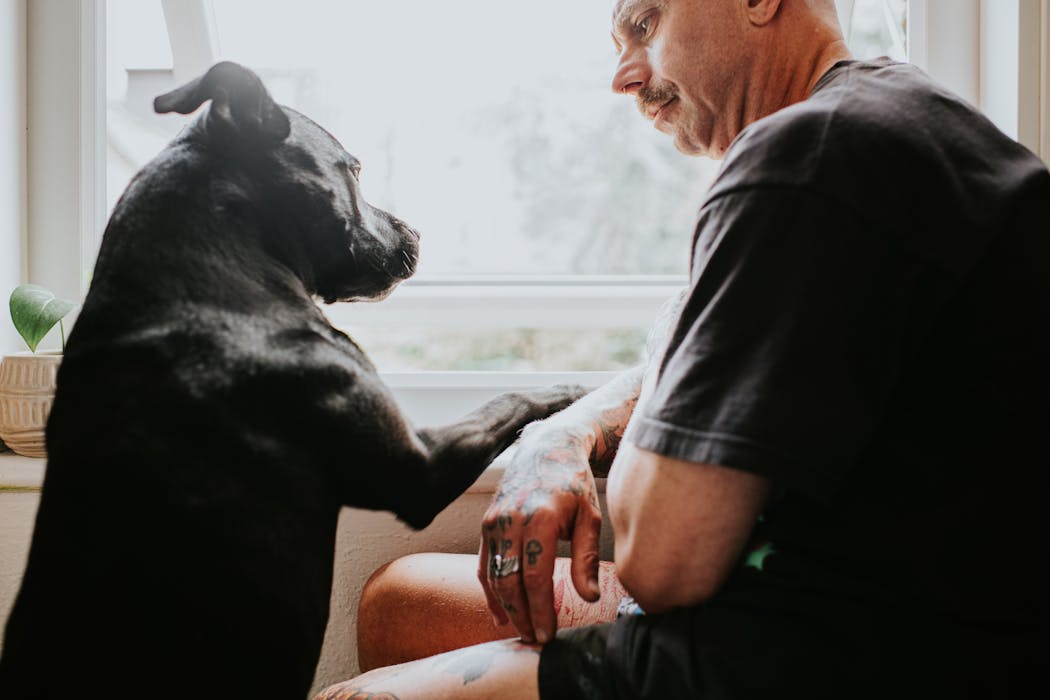
Americans love dogs.
Nearly half of U.S. households have one, and practically all owners see pets as part of the family – 51% say pets belong “as much as a human member.” The pet industry keeps generating more and more jobs, from vets to trainers, to influencers. Schools cannot keep up with the demand for veterinarians.
It all seems part of what Mark Cushing, a lawyer and lobbyist for veterinary issues, calls “the pet revolution”: the more and more privileged place that pets occupy in American society. In his 2020 book “Pet Nation,” he argues that the internet has caused people to become more lonely, and this has made them focus more intensely on their pets – filling in for human relationships.
I would argue that something different is happening, however, particularly since the COVID-19 lockdown: Loving dogs has become an expression not of loneliness but of how unhappy many Americans are with society and other people.
In my own book, “Rescue Me,” I explore how today’s dog culture is more a symptom of our suffering as a society than a cure for it. Dogs aren’t just being used as a substitute for people. As a philosopher who studies the relationships between animals, humans and the environment, I believe Americans are turning to dogs to alleviate the erosion of social life itself. For some owners, dogs simply offer more satisfying relationships than other people do.
And I am no different. I live with three dogs, and my love for them has driven me to research the culture of dog ownership in an effort to understand myself and other humans better. By nature, dogs are masters of social life who can communicate beyond the boundaries of their species. But I believe many Americans are expecting their pets to address problems that they cannot fix.
Dogs over people
During the pandemic, people often struggled with the monotony of spending too much time cooped up with other humans – children, romantic partners, roommates. Meanwhile, relationships with their dogs seemed to flourish.
Rescuing shelter animals grew in popularity, and on social media people celebrated being at home with their pets. Dog content on Instagram and Pinterest now commonly includes hashtags like #DogsAreBetterThanPeople and #IPreferDogsToPeople.
“The more I learn about people, the more I like my dog” appears on merchandise all over e-commerce sites such as Etsy, Amazon and Redbubble.
One 2025 study found that dog owners tend to rate their pets more highly than their human loved ones in several areas, such as companionship and support. They also experienced fewer negative interactions with their dogs than with the closest people in their lives, including children, romantic partners and relatives.
The late primatologist Jane Goodall celebrated her 90th birthday with 90 dogs. She stated in an interview with Stephen Colbert that she preferred dogs to chimps, because chimps were too much like people.
Fraying fabric
This passion for dogs seems to be growing as America’s social fabric unravels – which began long before the pandemic.
In 1972, 46% of Americans said “most people can be trusted.” By 2018, that percentage dropped to 34%. Americans report seeing their friends less than they used to, a phenomenon called the “friendship recession,” and avoid having conversations with strangers because they expect the conversation to go badly. People are spending more time at home.
Today, millennials make up the largest percentage of pet owners. Some cultural commentators argue dogs are especially important for this generation because other traditional markers of stability and adulthood – a mortgage, a child – feel out of reach or simply undesirable. According to the Harris Poll, a marketing research firm, 43% of Americans would prefer a pet to a child.
Amid those pressures, many people turn to the comfort of a pet – but the expectations for what dogs can bring to our lives are becoming increasingly unreasonable.
For some people, dogs are a way to feel loved, to relieve pressures to have kids, to fight the drudgery of their job, to reduce the stress of the rat race and to connect with the outdoors. Some expect pet ownership to improve their physical and mental health.

curtoicurto/iStock via Getty Images Plus
And it works, to a degree. Studies have found dog people to be “warmer” and happier than cat people. Interacting with pets can improve your health and may even offer some protection against cognitive decline. Dog-training programs in prisons appear to reduce recidivism rates.
Unreasonable expectations
But expecting that dogs will fill the social and emotional gaps in our lives is actually an obstacle to dogs’ flourishing, and human flourishing as well.
In philosophical terms, we could call this an extractive relationship: Humans are using dogs for their emotional labor, extracting things from them that they cannot get elsewhere or simply no longer wish to. Just like natural resource extraction, extractive relationships eventually become unsustainable.
The late cultural theorist Lauren Berlant argued that the present stage of capitalism creates a dynamic called “slow death,” a cycle in which “life building and the attrition of life are indistinguishable.” Keeping up is so exhausting that, in order to maintain that life, we need to do things that result in our slow degradation: Work becomes drudgery under unsustainable workloads, and the experience of dating suffers under the unhealthy pressure to have a partner.
Similarly, today’s dog culture is leading to unhealthy and unsustainable dynamics. Veterinarians are concerned that the rise of the “fur baby” lifestyle, in which people treat pets like human children, can harm animals, as owners seek unnecessary veterinary care, tests and medications. Pets staying at home alone while owners work suffer from boredom, which can cause chronic psychological distress and health problems. And as the number of pets goes up, many people wind up giving up their animal, overcrowding shelters.
So what should be done? Some philosophers and activists advocate for pet abolition, arguing that treating any animals as property is ethically indefensible.
This is a hard case to make – especially with dog lovers. Dogs were the first animal that humans domesticated. They have evolved beside us for as long as 40,000 years, and are a central piece of the human story. Some scientists argue that dogs made us human, not the other way around.
Perhaps we can reconfigure aspects of home, family and society to be better for dogs and humans alike – more accessible health care and higher-quality food, for example. A world more focused on human thriving would be more focused on pets’ thriving, too. But that would make for a very different America than this one.

Margret Grebowicz does not work for, consult, own shares in or receive funding from any company or organization that would benefit from this article, and has disclosed no relevant affiliations beyond their academic appointment.