
Anxiety over aging may make women age faster
- A new study suggests that anxiety over aging may contribute to accelerated aging among women, particularly due to fears about declining health.
- The study found that subjective experiences of anxiety about aging can drive objective measures of aging, and that this association is strongest for concerns about declining health.
- Women in midlife may experience increased anxiety about aging due to cultural norms around youth and beauty, as well as caregiving responsibilities for aging parents.
- The study analyzed data from 726 women and found that greater anxiety about growing old was associated with accelerated epigenetic aging, which could contribute to physical decline and increased vulnerability to aging-related diseases.
- More research is needed to understand how anxiety about aging influences aging over time, but the study highlights the importance of addressing aging anxiety through societal norms, structural factors, and interpersonal relationships.
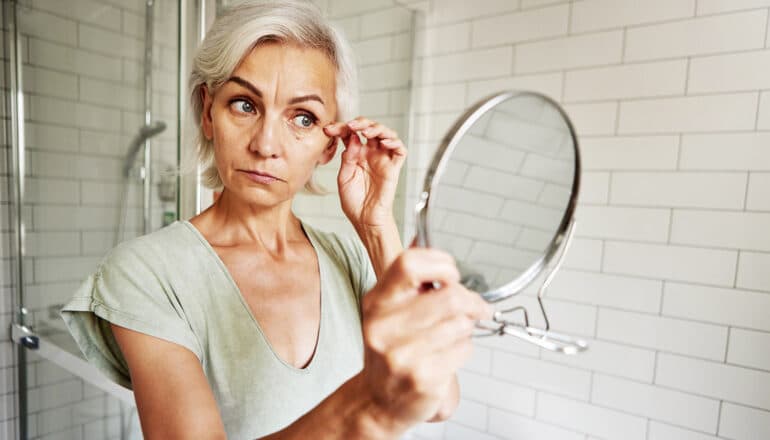
Having anxiety about aging—particularly fears about declining health—may manifest on a cellular level and contribute to accelerated aging among women, according to a new study.
“Our research suggests that subjective experiences may be driving objective measures of aging,” says Mariana Rodrigues, a PhD student at New York University’s School of Global Public Health and the first author of the study in the journal Psychoneuroendocrinology.
“Aging-related anxiety is not merely a psychological concern, but may leave a mark on the body with real health consequences.”
Many people experience stress about aging, worrying about physical decline, illness, and a loss of independence. Moreover, research shows that psychological distress can contribute to biological aging through epigenetic changes, or changes in how genes are expressed.
“We know from previous research that anxiety, depression, and mental health in general are associated with a number of physical health outcomes, but until now researchers haven’t focused on whether there is a correlation between worrying about aging and the process of aging itself,” says Rodrigues.
Women in particular may have anxiety about aging, given cultural norms about youth and beauty as well as concerns about declining fertility.
“Women in midlife may also be multiple in roles, including caring for their aging parents. As they see older family members grow older and become sick, they may worry about whether the same thing will happen to them,” says Rodrigues.
To better understand the relationship between anxiety about aging and aging itself, the researchers analyzed data from 726 women who took part in the Midlife in the United States (MIDUS) study. Women were asked about how much they worried about becoming less attractive with age, having more health issues, and being too old to have children.
The study also collected blood samples to measure aging using two “epigenetic clocks”: one that captures the pace of biological aging (DunedinPACE) and one that estimates cumulative biological damage (GrimAge2).
Having greater anxiety about growing old was associated with accelerated epigenetic aging, as measured by the DunedinPACE epigenetic clock. These biological changes could potentially contribute to physical decline and increased vulnerability to aging-related diseases.
Worrying about declining health had the strongest associations with epigenetic aging, while anxiety about declining attractiveness and fertility were not significantly associated with epigenetic aging. This may be because research shows that health-related concerns are more common and persist over time, while worries about beauty and reproductive health may fade with age.
According to the researchers, the study is a reminder that mental and physical health across the lifespan are intimately connected—despite often being treated as separate entities.
“Our research identifies aging anxiety as a measurable and modifiable psychological determinant that seems to be shaping aging biology,” says Adolfo Cuevas, associate professor of social and behavioral sciences at NYU School of Global Public Health and the study’s senior author.
The researchers also note that the study, which provides a snapshot of aging anxiety and biomarkers at one point in time, can’t rule out that other factors may be influencing these biological changes. Harmful health behaviors often used to cope with anxiety may help to explain the link between aging anxiety and accelerated aging. When the researchers adjusted their analyses to control for health behaviors like smoking and alcohol use, the association between aging anxiety and epigenetic aging decreased and was no longer significant.
More studies are needed to clarify how this type of anxiety influences aging over time, which could help health professionals determine how to best support those experiencing aging anxiety and mitigate related harm.
“Aging is a universal experience,” says Rodrigues. “We need to start a discourse about how we as a society—through our norms, structural factors, and interpersonal relationships—address the challenges of aging.”
Support for the research came from the National Institute of Diabetes and Digestive and Kidney Diseases.
Source: NYU
The post Anxiety over aging may make women age faster appeared first on Futurity.