
From ski jumps and sliding bobsleds to engineering snow, here are 5 essential reads on the science of the Winter Olympics
- The 2026 Winter Olympics will feature unique laws of physics at play, such as gravity, lift, and drag, which govern sports like ski jumping and sliding bobsleds.
- Mathematics also plays a role in the Winter Olympics, particularly in hockey, where luck is found to be a larger factor in determining game outcomes than in other team sports.
- The engineering behind artificial snow is an impressive feat, involving the creation of icy droplets through pressurized water and freezing them into a tight, dense structure that can affect athlete performance.
- Psychological biases also come into play when judging Olympic performances, with athletes’ memories of earlier events influencing their perception of later ones, and judges being susceptible to similar biases in scoring decisions.
- The Winter Olympics offer a unique opportunity for science enthusiasts to appreciate the intricate physics and engineering that underpin these sports, from the aerodynamics of skiers to the mathematics of hockey game outcomes.
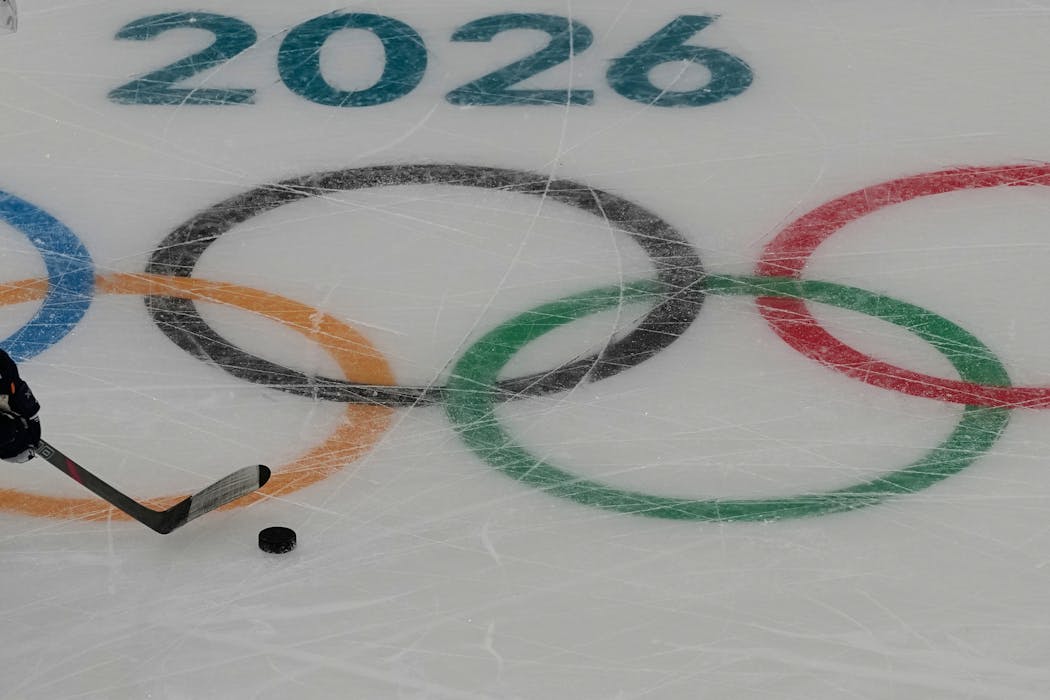
Thousands of the world’s best athletes will flock to Milan and Cortina d’Ampezzo in Italy in February 2026 for the 25th Winter Olympics. While sports fans are focused on the athletic feats of the Olympians, science enthusiasts can also have fun watching them.
Lots of winter sports are governed by unique laws of physics – from skaters speeding across the ice to skiers and snowboarders seemingly floating through the air. The artificial snow that athletes ski or board over is an engineering feat. The Winter Olympics even have math: Mathematicians have found that luck plays a larger role in hockey games than in other sports, such as baseball, basketball and football.
To help our readers follow both the sports and the science while watching the Games this year, The Conversation U.S. has compiled a set of stories from our archive.
1. The physics of ski jumping
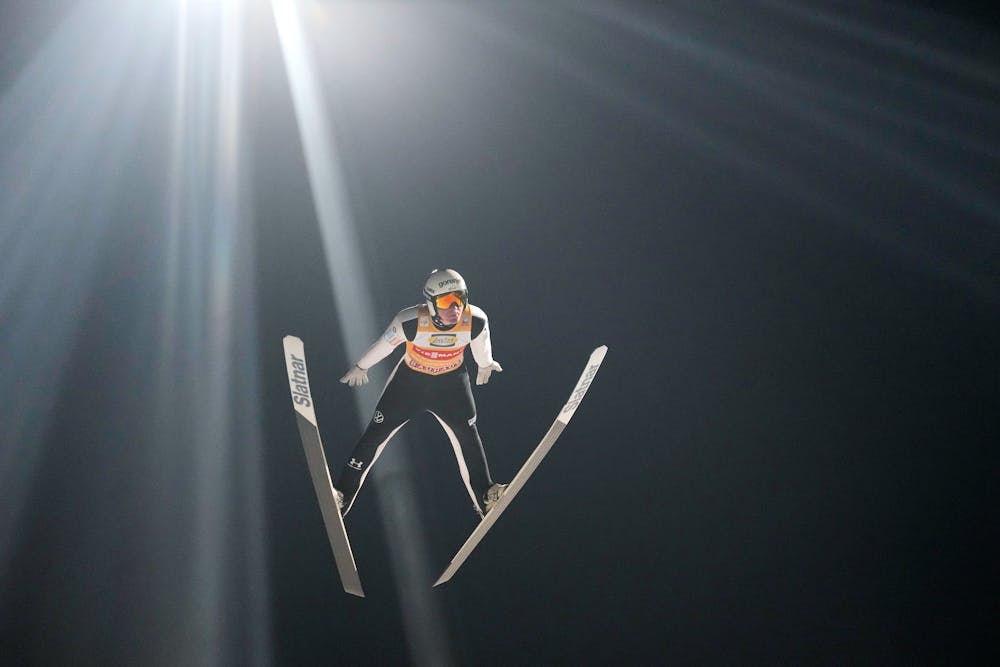
Olympic ski jumping is not for the faint of heart. Athletes plummet down a jump about 300 feet (100 meters) tall, before taking off into the air. They then can fly more than the length of a football field before touching down.
As physicist Amy Pope wrote in her article, three key physics concepts allow them to float through the air: gravity, lift and drag.
The regulations around the sport reinforce these ideas. Athletes must wear form-fitting suits to ensure they’re not getting even a little extra lift from any loose or flapping cloth. The skis athletes use must have a length proportional to their height and weight, as well.
AP Photo/Matthias Schrader
“By turning their skis and bodies into what is essentially a wing, ski jumpers are able to fight gravity and stay airborne for five to seven seconds,” Pope wrote.
Read more:
Ski jump: Flying or falling with style?
2. The physics of sliding sports
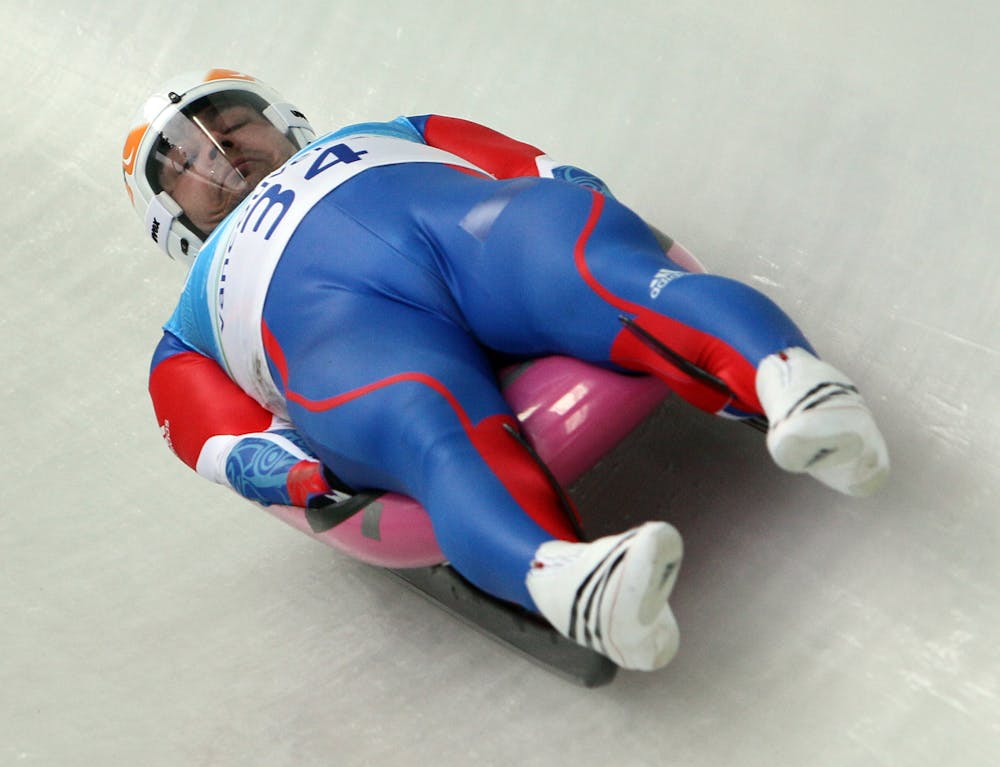
Unlike the ski jumpers, athletes in Olympic sliding sports – luge, bobsled and skeleton – don’t get any air, but they reach a more blistering speed while ripping down the icy track, around 90 miles per hour (145 kilometers per hour).
But just like ski jumping, gravity plays a part in sliding sports. As physicist John Eric Goff described in his article, it acts as the thrust sending them down the track. Sliders also wear skintight suits, which help them gain more speed by slicing through the air. Unlike the ski jumpers, they’re attempting to avoid drag and will lie as flat as possible on the sled. Bobsledders turn using steering controls, while luge and skeleton athletes turn using subtle body movements.
AP Photo/Ricardo Mazalan
“All of these subtle movements are hard to see on television, but the consequences can be large – oversteering may lead to collisions with the track wall or even crashes,” wrote Goff. “Though it may appear that the riders simply slide down the icy track at great speeds after they get going, there is a lot more going on.”
3. The mathematics of hockey
As hockey players slide across the ice, they’re contending with similar forces, such as friction and drag. However, there’s also another concept at play on the rink: luck.
Mark Robert Rank is a social scientist who wrote a book about luck. In his research, he found that compared to other popular team sports, luck plays a larger role in a hockey team’s likelihood to win a game.
“Anyone who has ever watched a professional hockey game can grasp the randomness that’s taking place on the ice. Skates or sticks often randomly deflect shots when players cross in the path of a puck’s trajectory. Pucks can take strange bounces as they travel across the rink. Goalies might just happen to be in the right place at the right time,” Rank wrote.
While Rank focused on National Hockey League games in his studies, Olympic athletes may see a similar effect as they take to the ice in Italy.
Read more:
The luck of the puck in the Stanley Cup – why chance plays such a big role in hockey
4. The engineering behind fake snow
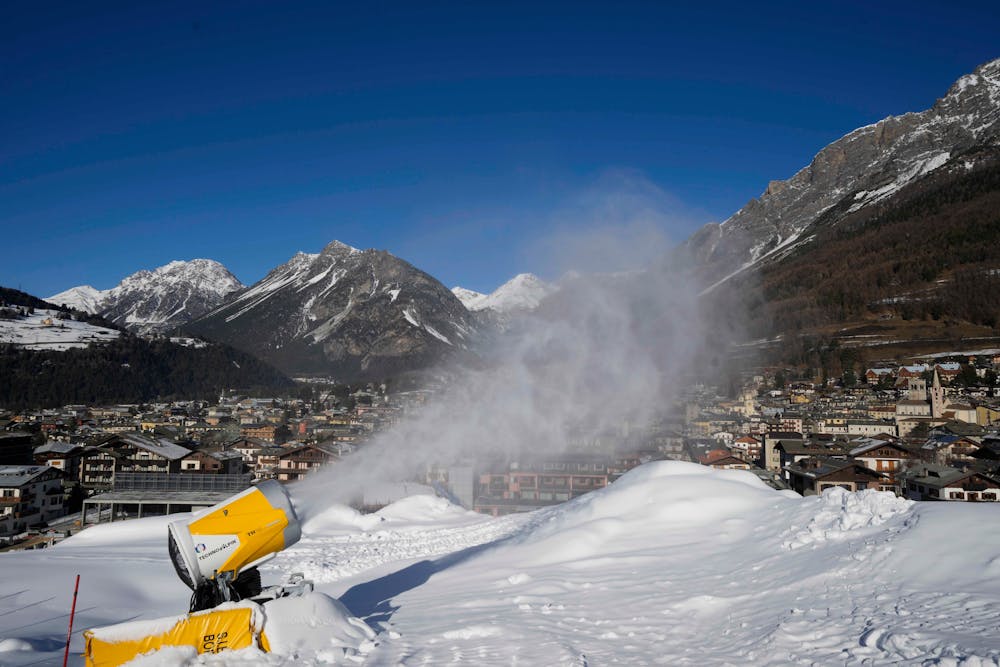
While the Winter Olympics normally take place in countries that receive a sizable snowfall, the host city can’t always count on Mother Nature to create prime conditions for competition. It’s now commonplace for skiers and boarders to compete on artificially generated snow, and Milan and Cortina d’Ampezzo will be no exception.
AP Photo/Luca Bruno, File
Engineering a phenomenon as intricate and delicate as snow isn’t easy, as atmospheric scientist Peter Veals explained in his article. Natural snowflakes are delicate, pronged crystals that fit together only loosely. Their structures create a light, airy texture.
Artifical snow is created by blowing pressurized water into cold air, where it quickly freezes into little icy droplets. These droplets don’t take on the same structure as natural snowflakes and end up packing together tightly.
An athlete’s preference might depend on their sport – dense artificial snow might serve a slalom skier carving tight turns more than a jumper who wants a fluffy cushion of powder to land on.
“Artificial snow often feels hard and icy. Fresh natural ‘powder’ snow, on the other hand, provides skiers and snowboarders an almost weightless feeling as they soar down the mountainside,” Veals explained.
5. Psychological biases
In many Winter Olympics sports, athletes take turns, competing in a set order. As psychologist Robin Kramer explained in his article, the first and last events in a sequence tend to stick out more in your brain. You might remember the first snowboarder to drop into the half pipe more clearly than the sixth, for example.
And you’re more likely to judge a performance based on how you judged the previous one in the sequence.
Even Olympic judges aren’t immune to these decision-making effects. Some sports have pushed for computer analysis for judging to reduce human biases. But usually it’s impossible to entirely remove the human elements of scoring.
“Realizing that athletes could win or lose Olympic medals based upon where in a sequence they compete is both surprising and worrying,” Kramer wrote. “With more research into these biases, we can figure out how to prevent them from influencing important outcomes like who goes home with the gold.”
Read more:
Our psychological biases mean order matters when we judge items in sequence
This story is a roundup of articles from The Conversation’s archives.
