
Broncos say their new stadium will be ‘privately financed,’ but ‘private’ often still means hundreds of millions in public resources
- The Denver Broncos’ new stadium will be “privately financed,” but this term often still means hundreds of millions in public resources are involved.
- Private financing arrangements can mask public dollars, making projects appear more enticing than they actually are. Team owners often receive public dollars through tax breaks and property tax exemptions, which is government spending in disguise.
- Rental payments spent on facilities should not be counted as private dollars; however, lawmakers regularly allow teams to count these payments as private contributions, making sports subsidies look less generous than they actually are.
- The Buffalo Bills’ stadium example illustrates how a subsidy agreement can result in the city giving up significant revenue (up to $25 billion) in exchange for financing the stadium privately. This highlights the need for lawmakers to consider the full cost of such projects and their potential impact on taxpayers.
- Lawmakers should better appreciate the risks and costs associated with government participation in sports facility development, including privately financed ones, and consider alternative uses for public resources that could generate greater benefits for current and future taxpayers.
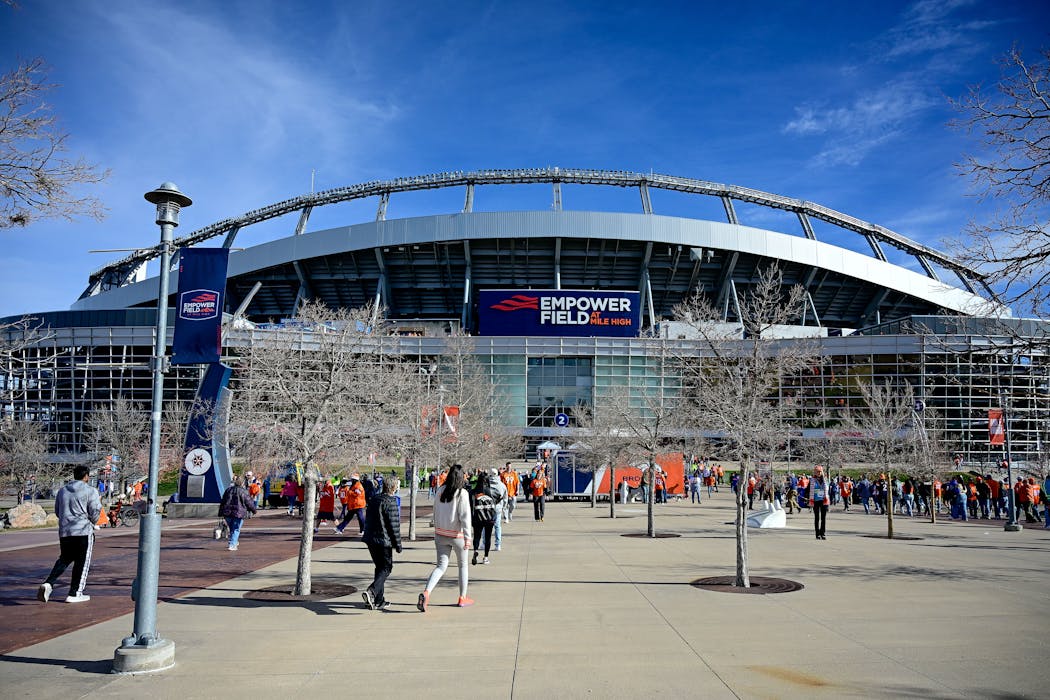
The Denver Broncos announced in early September 2025 their plan to build a privately financed football stadium. The proposal received a lot of attention and praise.
Across the five major sports leagues in the U.S. – the NBA, NHL, NFL, MLB and MLS – only 20% of facilities are privately owned.
I’ve studied the intersection of state and local public finance and pro sports for two decades. This experience has led me to approach claims of private financing with suspicion.
Private dollars are often masked as public dollars in these arrangements.
Private vs public dollars
In theory, what counts as private or public dollars is uncontroversial. Dollars are public when government has a legal claim over them – otherwise, they are private.
The public versus private dollar distinction matters when accounting for who is contributing how much to a sports facility. When public dollars are allowed to count as private dollars, a project proposal looks more enticing than it is, in fact.
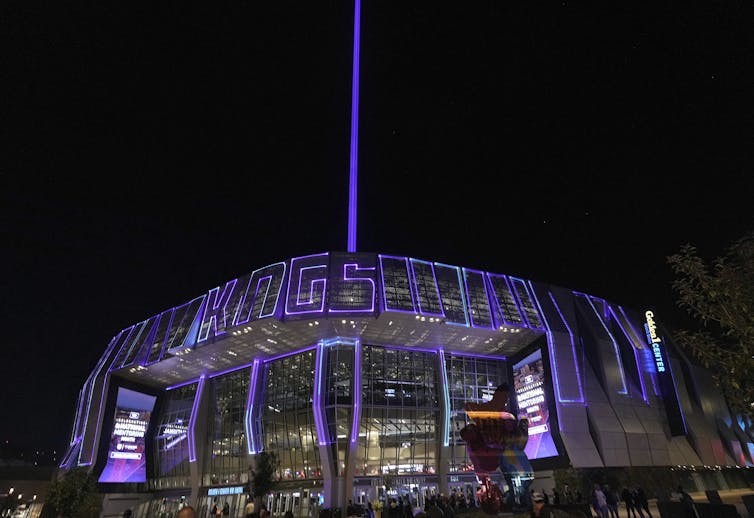
For instance, lawmakers regularly allow team owners to count public dollars as private dollars. The Sacramento City Council agreed to let the NBA’s Sacramento Kings count their property tax payments for the city-owned arena as private contributions to the overall cost of financing the arena. But property taxes are public dollars that in other instances go toward public services like schools and road repairs.
Thearon W. Henderson/Getty Images
Team owners building private facilities also typically receive public dollars through tax breaks, which is government spending in disguise. Property tax exemptions, sales and use tax exemptions on materials and machinery, and income tax credits are common forms of government givebacks to sports team owners.
I’ve estimated that property tax exemptions alone, among facilities in the five major leagues, have cost state and local governments US$20 billion cumulatively over the life of teams’ leases, 42% of which would have gone to K-12 education.
Rental payments spent on facilities are not private dollars
Many facilities and their infrastructure are funded through public debt secured in part by team rental payments. Lawmakers, media and consultants often view projects secured by rents as privately financed, in part or whole.
However, rental income in exchange for use or operation of public property should not be counted as private dollars.
Here’s a thought experiment. Suppose state lawmakers allocated the rent paid for use of campground sites in a state park to pay for new campground bathrooms. Are the bathrooms privately funded?
The flaw in concluding “yes” arises from a failure to appreciate that lawmakers, through policy, create legal claims over certain dollars. All dollars start as private dollars, but through the tax system, lawmakers transfer ownership of some dollars to the public.
It is the government landlord’s choice, a policy decision, to spend the rental income on the rented property, a choice available to them only if they own the rental income in the first place.
Yet lawmakers regularly allow teams, both professional and minor league, to count rental payments as private contributions. This accounting makes sports subsidies look less generous than they actually are.

Looking beyond construction
Facilities not only need to be constructed but also operated, maintained and eventually upgraded. Roads, sewer lines, overpasses, game-day security and emergency response and public policies to mitigate gentrification caused by a facility are all common taxpayer-funded touchpoints. In addition, facilities have preconstruction costs such as land acquisition, soil remediation and site preparation, as well as later costs such as demolition and remediation for the land’s next use.
Focusing on privately financed construction and ignoring all other aspects of a project’s development and operation is misleading, potentially contributing to lawmakers making inefficient and expensive policy decisions.
Aaron M. Sprecher/Getty Images
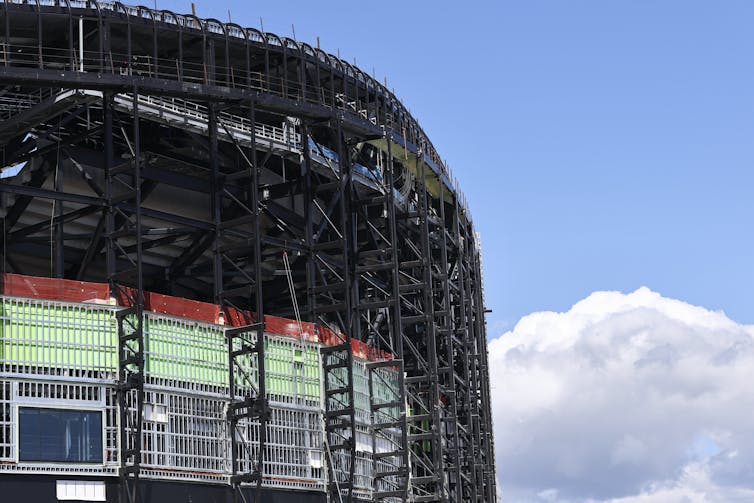
By way of example, the Council of the District of Columbia approved a subsidy agreement last year with the NFL’s Commanders. The stadium would be financed, constructed and operated by the team owner, who would pay $1 in rent per year and remit no property taxes. In exchange for financing the stadium privately, the owner receives exclusive development rights to 20 acres of land adjacent to the stadium for the next 90 years.
The stadium is expected to cost the owner $2.5 billion, with the city contributing $1.3 billion for infrastructure.
But the city also gives up market rental income between $6 billion and $25 billion,depending on future land appreciation rates, that it could make on the 20 acres.
In other words, the rent discount alone means the city gives up revenue equal to multiple stadiums in exchange for the Commanders providing one. It is as if the council has a Lamborghini, traded it straight up for a Honda Civic, and then praised themselves for their negotiation acumen that resulted in a “free” Civic.
The Broncos’ proposed stadium
As of January 2026, Denver taxpayers know only that the Broncos stadium construction will be privately financed and that public dollars will be spent on some infrastructure.
Being enamored with such a proposal is similar to being offered a $1 billion yacht at a 75% discount. In my experience, there are two types of public officials: one will want to spend $250 million to save $750 million, while the other will ask whether $250 million for a yacht is an appropriate use of taxpayer resources given existing needs elsewhere.
My hope is that lawmakers better appreciate the many ways government participation in sports facility development, including privately financed ones, imposes serious risks and costs for current and future taxpayers. What is the expected total cost of the stadium project over its life? How much of the life cost would public resources cover? Could public resources generate greater benefits in an alternative use? How much will it cost to mitigate or compensate those affected by a project’s expected negative side effects, such as gentrification, congestion, pollution and crime?
Read more of our stories about Colorado.

Geoffrey Propheter does not work for, consult, own shares in or receive funding from any company or organization that would benefit from this article, and has disclosed no relevant affiliations beyond their academic appointment.