
Supreme Court is set to rule on constitutionality of Trump tariffs – but not their wisdom
- The US Supreme Court is set to rule on the constitutionality of Donald Trump’s tariffs, but not their wisdom, which raises concerns about economic democracy.
- The founders of the US intended for Congress to have exclusive power over tariff-making, as it can be a flashpoint between the government and its people, and to ensure that decisions are based on voter approval.
- Trump’s interpretation of the International Emergency Economic Powers Act allows him to impose tariffs without congressional oversight, which poses concerns about concentration of power, uncertainty, lack of accountability, corruption, and rent-seeking.
- The use of tariffs in this way can lead to a tax on domestic consumers and producers, with estimates suggesting that Trump’s tariffs could bring in over $2 trillion in revenue over 10 years, extracted from consumer pockets and producer profit margins.
- Trump’s unilateral and changeable tariffs also create an incentive for political favoritism and bribery, as companies or individuals may try to influence the president’s decisions through gifts, lobbying, or other means, undermining democratic legitimacy and preventing the concentration of power in a single individual’s hands.
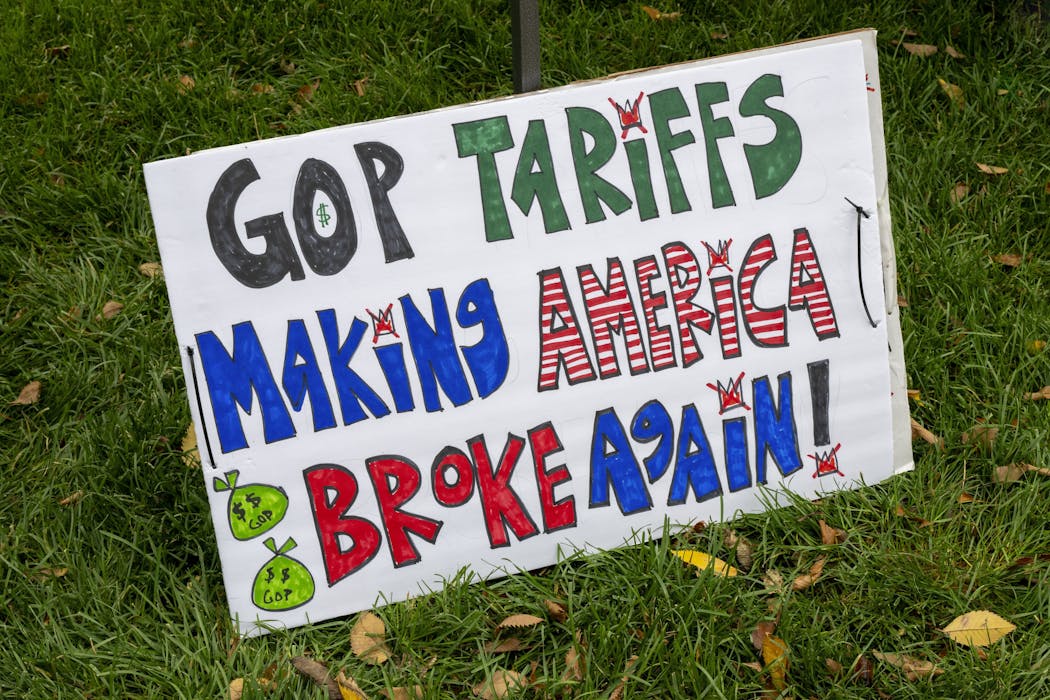
The future of many of Donald Trump’s tariffs are up in the air, with the Supreme Court expected to hand down a ruling on the administration’s global trade barriers any day now.
But the question of whether a policy is legal or constitutional – which the justices are entertaining now – isn’t the same as whether it’s wise. And as a trade economist, I worry that Trump’s tariffs also pose a threat to “economic democracy” – that is, the process of decision-making that incorporates the viewpoints of everyone affected by the decision.
Founders and economic democracy
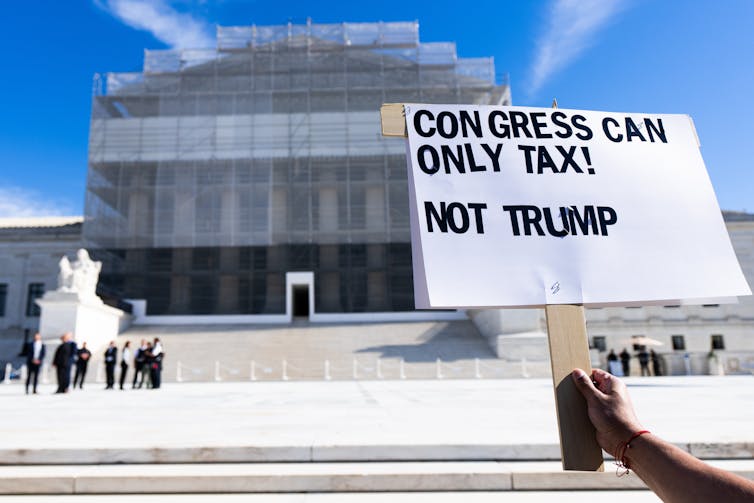
In many ways, the U.S. founders were supporters of economic democracy. That’s why, in the U.S. Constitution, they gave tariff- and tax-making powers exclusively to Congress.
And for good reason. Taxes can often represent a flash point between a government and its people. Therefore, it was deemed necessary to give this responsibility to the branch most closely tied to rule of, and by, the governed: an elected Congress. Through this arrangement, the legitimacy of tariffs and taxes would be based on voters’ approval – if the people weren’t happy, they could act through the ballot box.
To be fair, the president isn’t powerless over trade: Several times over the past century, Congress has passed laws delegating tariff-making authority to the executive branch on an emergency basis. These laws gave the president more trade power but subject to specific constitutional checks and balances.
The stakes for economic democracy
At issue before the Supreme Court now is Trump’s interpretation of one such emergency measure, the International Emergency Economic Powers Act of 1977.
Back in April 2025, Trump interpreted the law – which gives the president powers to respond to “any unusual and extraordinary threat” – to allow him to impose tariffs of any amount on products from nearly every country in the world.
Yet the act does not include any checks and balances on the president’s powers to use tariffs and does not even mention tariffs among its remedies. Trump’s unrestrained use of tariffs in this way was unprecedented in any emergency action ever taken by a U.S. president.
Setting aside the constitutional and legal issues, the move raises several concerns for economic democracy.
The first danger is in regards to a concentration of power. One of the reason tariffs are subjected to congressional debate and voting is that it provides a transparent process that balances competing interests. It prevents the interests of a single individual – such as a president who might substitute his own interests for that of the wider public interest – from controlling complete power.
Instead it subjects any proposed tariffs to the open competition of ideas among elected politicians.
Compare this to the way Trump’s tariffs were made. They were determined in large part by the president’s own political score-settling with other countries, and an ideological preference for trade surpluses. And they were not authorized by Congress. In fact, they bypassed the role of Congress as a check and balance – and this is not good for economic democracy in my view.
Bill Clark/CQ-Roll Call, Inc via Getty Images
The second danger is uncertainty. Unlike congressional tariffs, tariffs rolled out through the International Emergency Economic Powers Act under Trump have been altered many times and can continue to change in the future.
While supporters of the president have argued that this unpredictability gives the U.S. a bargaining advantage over competitor nations, many economists have noted that it severely compromises any goal of revitalizing American industries.
This is because both domestic and foreign investment in U.S.-based industries depends on stable and predictable import market access. Investors are unwilling to make large capital expenditures over several years and hire new workers if they think tariff rates might change at any time.
Even in the first year of the Trump tariffs, there is evidence of large-scale reductions in hiring and capital investment in the manufacturing sector due to this uncertainty.
The third danger concerns that lack of accountability involved in circumventing Congress. This can lead to using tariffs as a stealth way of increasing taxes on a population.
Importing companies generate revenue for the government through the additional levies they pay on goods from overseas. These costs are typically borne by domestic consumers, through increased prices, and importing companies, through lower profit margins.
Either way, Trump’s International Emergency Economic Powers Act interpretation has allowed him to use tariffs in a way that would – if allowed to stand – bring in additional government revenue of more than US$2 trillion over a 10-year period, according to estimates.
Trump frames the revenue his tariffs have raised as a windfall of foreign-paid duties. But in fact, the revenue is extracted from domestic consumer pockets and producer profit margins. And that amounts to a tax on both.
Corruption concerns
Finally, the way Trump’s used the act to roll out unilateral and changeable tariffs creates an incentive for political favoritism and even bribery.
This is down to what economists call “rent seeking” – that is, the attempt by companies or individuals to get extra money or value out of a policy through influence or favoritism.
As such, Trump can, should he wish, play favorites with “priority” industries in terms of tariff exemptions. In fact, he has already done this with major U.S. companies that import cell phones and other electronics products. They asked for special exemptions for the products they imported, a favor not granted to other companies. And there is nothing stopping recipients of the exemptions offering, say, to contribute to the president’s political causes or his renovations to the White House.
Smaller and less politically influential U.S. businesses do not have the same clout to lobby for tariff relief.
And this tariff-by-dealmaking goes beyond U.S. companies looking for relief. It extends into the world of manipulating governments to bend to Washington’s will. Unlike congressional tariffs under World Trade Organization rules, International Emergency Economic Powers Act tariffs discriminate from country to country – even on the same products.
And this allows for trade deals that focus on extracting bilateral deals that take place without considering broader U.S. interests. In the course of concluding bilateral Trump trade deals, some foreign governments such as Switzerland and Korea have even offered Trump special personal gifts, presumably in exchange for favorable terms. Presidential side deals and gift exchanges with individual countries are, as many scholars of good international governance have noted, not the best way to conduct global affairs.
The harms of having a tariff system that eschews the normal checks and balances of the American system are nothing new, or at least shouldn’t be.
Back in the late 1700s, with the demands of a tyrannical and unaccountable king at the front of their minds, the founders built a tariff order aimed at maintaining democratic legitimacy and preventing the concentration of power in a single individual’s hands.
A challenge to that order could have worrisome consequences for democracy as well as the economy.

Kent Jones does not work for, consult, own shares in or receive funding from any company or organization that would benefit from this article, and has disclosed no relevant affiliations beyond their academic appointment.