
Journalism may be too slow to remain credible once events are filtered through social media
- The author argues that journalism’s slow pace is becoming a credibility issue due to the rapid dissemination of information on social media.
- The war in Ukraine has highlighted the problem, where journalists’ traditional strengths (e.g., verification, narrative coherence) become sources of lag in covering real-time events.
- The acceleration of modern warfare and social media platforms have created an “acceleration trap” for journalism, where accurate reports often arrive after audiences have already formed an impression.
- This has led to a structural shift in trust, where journalism is no longer perceived as the primary interpreter of events, but as one voice among many arriving late, with speed becoming a proxy for relevance.
- The author suggests that journalism’s future credibility will depend on reconciling rigor with speed, potentially by trading early certainty for real-time doubt and transparency, to maintain trust in an increasingly fast-paced world.
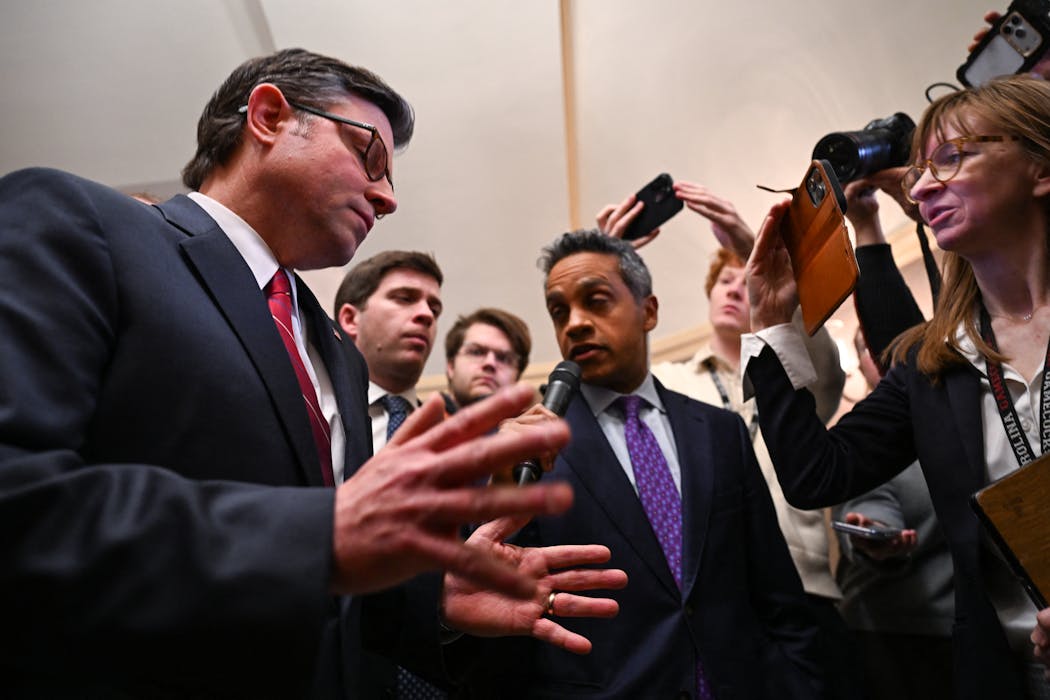
In the first weeks after Russia’s invasion of Ukraine in 2022, a strange pattern emerged in Western media coverage. Headlines oscillated between confidence and confusion. Kyiv would fall within days, one story would claim, then another would argue that Ukraine was winning. Russian forces were described as incompetent, then as a terrifying existential threat to NATO.
Analysts spoke with certainty about strategy, morale and endgames, but often reversed themselves within weeks. To many news consumers, this felt like bias – either pro-Ukraine framing or anti-Russia narratives. Some commentators accused Western media outlets of cheerleading or propaganda.
But I’d argue that something more subtle was happening. The problem was not that journalists were biased. It was that journalism could not keep pace with the war’s informational structure. What looked like ideological bias was, more often, temporal lag.
I serve in the Navy as a war gamer. The most critical part of my job is identifying institutional failures. Trust is one of the most critical and, in this sense, the media is losing ground.
The gap between what people experience in real time and what journalism can responsibly publish has widened. This gap is partly where trust erodes. Social media collapses the distance between event, exposure and interpretation. Claims circulate before journalists can evaluate them.
This matters in my world because the modern battlefield is not just physical. Drone footage circulates instantly. Social media channels release claims in real time. Intelligence leaks surface before diplomats can respond.
These dynamics also matter for the public at large, which encounters fragments of reality, often through social media, long before any institution can responsibly absorb and respond to them.
Journalism, by contrast, is built for a slower world.
Slow journalism
At the core of their work, journalists observe events, filter signal from noise, and translate complexity into narrative. Their professional norms – editorial gatekeeping, standards for sourcing, verification of facts – are not bureaucratic relics. They are the mechanisms that produce coherence rather than chaos.
But these mechanisms evolved when information arrived more slowly and events unfolded sequentially. Verification could reasonably precede publication. Under those conditions, journalism excelled as a trusted intermediary between raw events and public understanding.
These conditions no longer exist.
AP Photo/Leo Correa
Information now arrives continuously, often without clear provenance. Social media platforms amplify fragments of reality in real time, while verification remains necessarily slow. The key constraint is no longer access; it is tempo.
Granted, reporters often present accounts as events are occurring, whether on live broadcasts or through their own social media posts. Still, in this environment, journalism’s traditional strengths become sources of lag.
Caution delays response. Narrative coherence hardens fast. Corrections then feel like reversals rather than refinements.
Covering real-time events
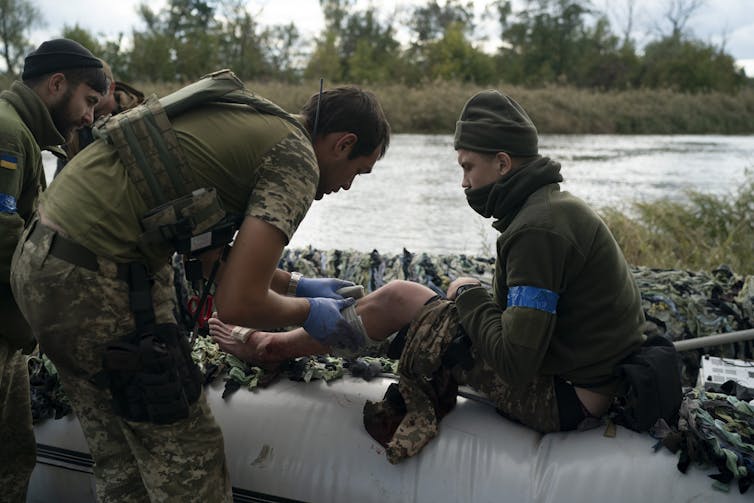
The war in Ukraine has made this failure mode unusually visible. Modern warfare generates data faster than any institution can metabolize. Battlefield video and real-time casualty claims flood the system continuously.
For their part, journalists are forced to operate from an impossible position: expected to interpret events at the same speed they are livestreamed. And so journalists are forced sometimes to improvise.
Early coverage of the war leaned on simplified frames, including Russian incompetence, imminent victory and decisive turning points. They provided provisional stories generated to satisfy intense public demand for clarity.
As the war evolved, however, those stories collapsed.
SOPA Images via Getty Images
This did not mean the original reporting was malicious. It meant the narrative update cycle lagged behind the underlying reality. What analysts experienced as iterative learning, audiences experienced as contradiction.
The acceleration trap
This forces journalism into a reactive posture. Verification trails amplification, meaning accurate reports often arrive after the audience has already formed a first impression.
This inverts journalism’s historical role. Audiences encounter raw claims first and journalism second. When the two diverge, journalism appears disconnected from reality as people experienced it.
Over time, this produces a structural shift in trust. Journalism is no longer perceived as the primary interpreter of events, but as one voice among many, arriving late. Speed becomes a proxy for relevance. Interpretation without immediacy is discounted.
Although partisan bias certainly exists, it is insufficient to explain the systemic incoherence Americans are witnessing.
Can journalism adapt?
Institutions optimized for one tempo rarely adapt cleanly to another. Journalism is now confronting the risk that its interpretive cycle no longer matches the speed of the world it is trying to explain.
Its future credibility will depend less on accusations of bias or even error than the question of whether it can reconcile rigor with speed, perhaps by trading the illusion of early certainty for the transparency of real-time doubt.
If it cannot, trust will continue to drain. An institution that evolved to help society see is falling behind what society is already watching.
The opinions and views expressed are those of the author alone and do not necessarily represent those of the Department of the Navy or the U.S. Naval War College.

Charles Edward Gehrke does not work for, consult, own shares in or receive funding from any company or organization that would benefit from this article, and has disclosed no relevant affiliations beyond their academic appointment.