
Even with Trump’s support, coal power remains expensive – and dangerous
- President Donald Trump’s administration has aligned itself with the coal industry, including efforts to keep coal-fired power plants running despite declining demand and environmental concerns.
- The use of coal for electricity generation remains expensive and poses health risks, with thousands of miners developing black lung disease and millions of people dying prematurely from air pollution.
- Despite Trump’s support, coal mining remains a hazardous job, with recent deaths in West Virginia and other states, and safety reforms have been implemented to reduce miner fatalities.
- The rapid expansion of data centers for artificial intelligence is driving demand for electricity, leading some to rely on old coal-fired power plants, but this comes at the cost of increased air pollution and health risks.
- Coal faces an uncertain future in the US electricity mix due to its high costs compared to other fuels, with many mines closing or experiencing declining productivity, and government efforts may only slow its decline in the short term.
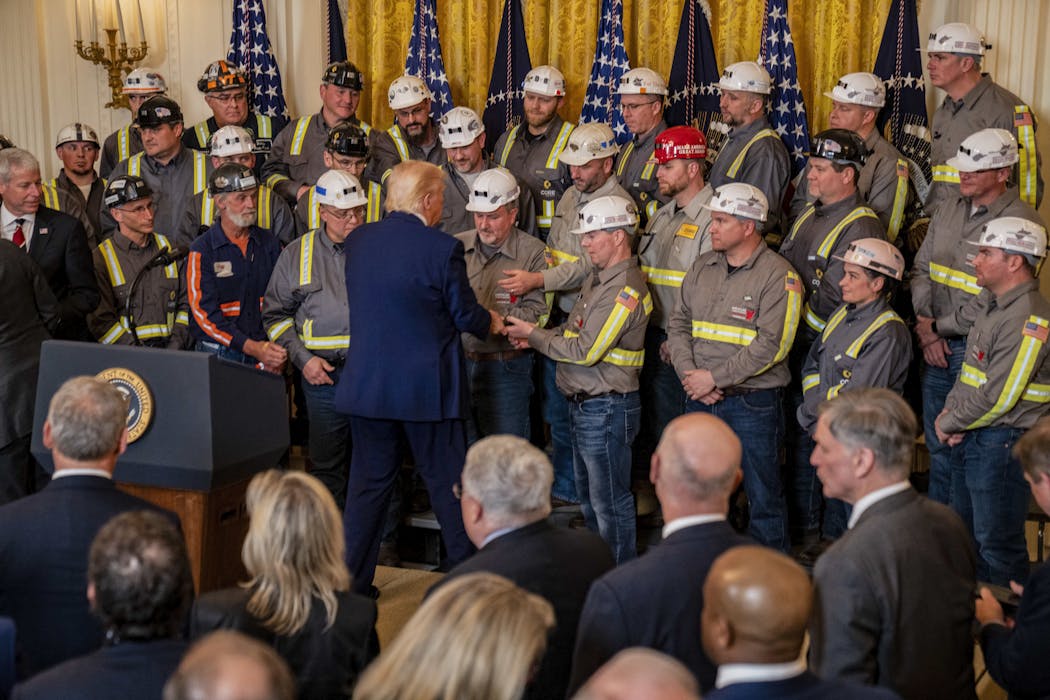
As projections of U.S. electricity demand rise sharply, President Donald Trump is looking to coal – historically a dominant force in the U.S. energy economy – as a key part of the solution.
In an April 2025 executive order, for instance, Trump used emergency powers to direct the Department of Energy to order the owners of coal-fired power plants that were slated to be shut down to keep the plants running.
He also directed federal agencies to “identify coal resources on Federal lands” and ease the process for leasing and mining coal on those lands. In addition, he issued orders to exclude coal-related projects from environmental reviews, promote coal exports and potentially subsidize the production of coal as a national security resource.
But there remain limits to the president’s power to slow the declining use of coal in the U.S. And while efforts continue to overcome these limits and prop up coal, mining coal remains an ongoing danger to workers: In 2025, there have been five coal-mining deaths in West Virginia and at least two others elsewhere in the U.S.

Jim West/UCG/Universal Images Group via Getty Images
A long legacy
Until 2015, coal-fired power plants generated more electricity than any other type of fuel in the U.S. But with the rapid expansion of a new type of hydraulic fracturing, natural gas became a cheap and stable source for power generation. The prices of solar and wind power also dropped steadily. These alternatives ultimately overcame coal in the U.S. power supply.
Before this change, coal mining defined the economy and culture of many U.S. towns – and some states and regions, such as Wyoming and Appalachia – for decades. And in many small towns, coal-related businesses, including power plants, were key employers.
Coal has both benefits and drawbacks. It provides a reliable fuel source for electricity that can be piled up on-site at power plants without needing a tank or underground facility for storage.
But it’s dirty: Thousands of coal miners developed a disease called black lung. The federal government pays for medical care for some sick miners and makes monthly payments to family members of miners who die prematurely. Burning coal also emits multiple air pollutants, prematurely killing half a million people in the United States from 1999 through 2020.
Coal is dangerous for workers, too. Some coal-mining companies have had abysmal safety records, leading to miner deaths, such as the recent drowning of a miner in a sudden flood in a West Virginia mine. Safety reforms have been implemented since the Big Branch Mine explosion in 2010, and coal miner deaths in the U.S. have since declined. But coal mining remains a hazardous job.

Jim West/UCG/Universal Images Group via Getty Images
A champion of coal
In both of his terms, Trump has championed the revival of coal. In 2017, for example, Trump’s Department of Energy asked the Federal Energy Regulatory Commission to pay coal and nuclear plants higher rates than the competitive market would pay, saying they were key to keeping the U.S. electricity grid running. The commission declined.
In his second term, Trump is more broadly using powers granted to the president in emergencies, and he is seeking to subsidize coal across the board – in mining, power plants and exports.
At least some of the urgency is coming from the rapid construction of data centers for artificial intelligence, which the Trump administration champions. Many individual data centers use as much power as a small or medium city. There’s enough generation capacity to power them, though only by activating power plants that are idle most of the time and that operate only during peak demand periods. Using those plants would require data centers to reduce their electricity use during those peaks – which it’s not clear they would agree to do.
So many data centers, desperate for 24/7 electricity, are relying on old coal-fired power plants – buying electricity from plants that otherwise would be shutting down.

Visions of America/Joseph Sohm/Universal Images Group via Getty Images
Limits remain
Despite the Trump adminstration’s efforts to rapidly expand data centers and coal to power them, coal is more expensive than most other fuels for power generation, with costs still rising.
Half of U.S. coal mines have closed within the past two decades, and productivity at the remaining mines is declining due to a variety of factors, such as rising mining costs, environmental regulation and competition from cheaper sources. Coal exports have also seen declines in the midst of the tariff wars.
The U.S. Department of the Interior’s recent effort to follow Trump’s orders and lease more coal on federal lands received only one bid – at a historically low price of less than a penny per ton. But in fact, even if the government gave its coal away for free, it would still make more economic sense for utilities to build power plants that use other fuels. This is due to the high cost of running old coal plants as compared to new natural gas and renewable infrastructure.
Natural gas is cheaper – and, in some places, so are renewable energy and battery storage. Government efforts to prevent the retirement of coal-fired power plants and boost the demand for coal may slow coal’s decline in the short term. In the long term, however, coal faces a very uncertain future as a part of the U.S. electricity mix.

Hannah Wiseman is affiliated with the Center for Progressive Reform. Along with a team of other Penn State researchers, she also received a seed grant from the Penn State Institute of Energy and the Environment for a project entitled "Assessing distributional effects of coal-fired power plant operations on pollution and health."
Seth Blumsack receives funding from the U.S. National Science Foundation, NASA, the Alfred P. Sloan Foundation and the Heising Simons Foundation.