
3 ways US actions in Venezuela violated international law
- US actions in Venezuela have been labeled as unlawful by heads of state, policymakers, and international law scholars due to violations of international law.
- The US has broken several laws, including the prohibition on using force under Article 2(4) of the UN charter, and violating the immunity of a sitting head of state from foreign national courts.
- The US actions also violate the principles of political independence and territorial integrity of Venezuela, as well as its permanent sovereignty over its natural resources.
- The consequences of these violations will be serious, including undermining trust in the US to comply with treaty commitments and potentially leading to a breakdown in international diplomacy and cooperation.
- International law scholars argue that the US actions are damaging to the rule of law and could have far-reaching repercussions for global stability and security.
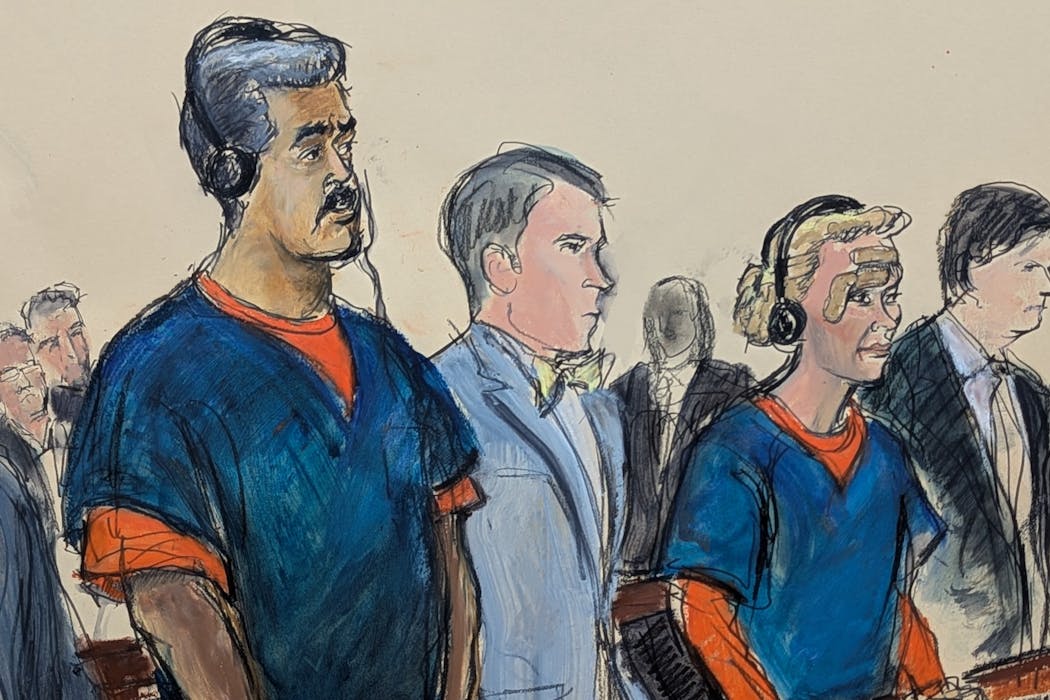
Heads of state, policymakers and international law scholars are among those who have labeled U.S. military actions against Venezuela and the Jan. 3, 2026, capture of its leader as unlawful. But what exactly does that mean?
The Conversation asked Mary Ellen O’Connell, a professor of international law at the University of Notre Dame, to explain what about recent actions by the U.S. violate international law and why that matters.
How would you describe U.S. actions in Venezuela in regards to international law?
I consider what happened on Jan. 3 as part of a series of unlawful actions by the U.S. toward Venezuela that began on Sept. 2, 2025, when the U.S. first attacked and blew up a small boat in the Caribbean alleged to be carrying illicit drugs to the U.S. Despite the worldwide outcry that those boat attacks were unlawful, the administration persisted.
The most egregious operation was the Jan 3. attacks on sites in Caracas, Venezuela, a densely populated city. They were intended as cover for special operations forces to go into the home of the president and forcefully detain him and his wife, Cilia Flores, and then bring them to the United States, where they’re now in custody and facing trial.
What laws were broken?
I’ve been thinking about these unlawful U.S. military operations in three big categories. There’s the category of international law prohibiting the use of force.
Then there is the category of international criminal law and who may lawfully be brought before foreign national courts to face criminal charges.
And the third is intervention in and imperial control of a foreign country.
Can you explain what you mean by each category?
In terms of international law and the use of force, we know that any use of military force of more than an insignificant kind is restricted by the United Nations charter. This would certainly include the kinds of missiles and bombs that the U.S. has been using since early September in the Caribbean and Pacific and on the territory of Venezuela. There’s a clear general prohibition on the use of force in Article 2(4). There are only two limitations on that general prohibition: when the Security Council authorizes use of force or when a state member of the U.N. has been attacked by another state with a significant armed attack.
The best example we have today of that category of self-defense is Ukraine’s defense against Russia. Venezuela would have had the right to use military force against this U.S. military intervention because the U.S. had no justification for carrying it out. So these are clear, demonstrable, major and important violations of international law by the U.S.
As for the second category, a sitting head of state has immunity from the jurisdiction of foreign national courts, period. So regardless of how Maduro was brought before U.S. courts, international law says someone who’s trying to run a government needs to be free of interference by foreign national courts.
This is a commonsense rule. Every country in the world probably has some issue with foreign national leaders, and if they started bringing criminal indictments against them, kidnapping them and bringing them in front of their courts, there would be no international travel by presidents or foreign ministers. International diplomacy would come to an end. There would be disruption, chaos and insecurity as a result.
The U.S. has an extradition treaty with Venezuela, and if the U.S. had viable criminal charges against any person in Venezuela, it is supposed to use the regular legal process of extradition to make sure that what it does is not lawless in itself. It’s one of the dark ironies of this episode that in the alleged attempt to enforce the law against these individuals, the U.S. is violating the law. The U.S. is sending the message that it is somehow above the law that we apply to others. It’s really damaging, in general, to the rule of law.
And then the third category, which is very worrying, refers to President Trump’s comments regarding how he would run Venezuela, that he would take wealth out of the ground. These are violations of the political independence and territorial integrity of Venezuela, and of its permanent sovereignty over its natural resources.
Those are core principles of international law. They have to do with people’s self-determination. They have to do with the most important rules that keep order in the world. If President Trump truly wants America to prosper in the world – to enjoy economic and cultural success – he needs to promote international law, not undermine it.
What are the consequences of this?
I believe every country, looking at what the U.S. is doing now, will have to recalculate whether they can trust the U.S. – whether they can trust the U.S. to comply with its treaty commitments, in particular the United Nations charter.
President Franklin Roosevelt saw the consequences of the Second World War, and he never wanted any country to have to pay the price of that sort of catastrophe again. The words of the charter preamble say it all. The U.N. was founded “to save succeeding generations from the scourge of war.” Again, that’s why we have a general prohibition on the use of force in the charter, with a Security Council that acts when there’s been a violation of that rule.
The world knows that the U.S. has played a very important role in sending the message that it cares about the charter and the law of peace, and that both reflect Americans’ deepest moral and philosophical commitments to life and community on this planet.
When that’s undermined, countries that don’t have those cares and concern will feel free to pursue their own policies, regardless of the good of the international community. I really believe that the repercussions will be very, very serious for a long time to come, even if they’re intangible.

Mary Ellen O'Connell does not work for, consult, own shares in or receive funding from any company or organization that would benefit from this article, and has disclosed no relevant affiliations beyond their academic appointment.