
Why Christian clergy see risk as part of their moral calling
- Christian clergy across the US are taking risks to protest harsh immigration enforcement actions and advocate for immigrant rights, seeing it as a moral calling.
- Their willingness to face arrest and bodily harm is rooted in their professional obligation to provide spiritual care for people in need and advocate for oppressed communities.
- Historical examples of clergy who challenged government leaders or policies were killed for their words and actions of protest, such as Archbishop Oscar Romero, canonized as a martyred saint by the Roman Catholic Church in 2018.
- Clergy are taking on risks to speak out on social issues, including abortion, racism, environmental justice, and gun violence, often at the risk of alienating church members or facing violent backlash.
- For many clergy, the call to ministry includes an obligation to express their values of care for vulnerable neighbors precisely through a public willingness to accept personal risk, as seen in recent protests against ICE actions and immigration detention centers.
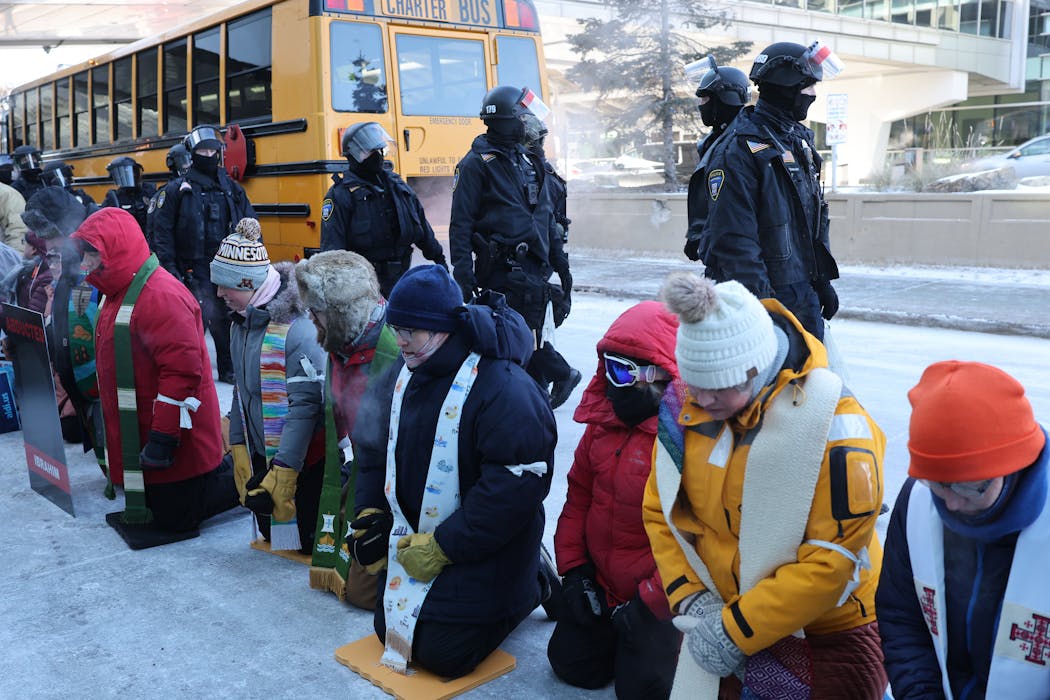
As Christian clergy across the United States participate in ongoing protests against harsh immigration enforcement actions and further funding for U.S. Immigration and Customs Enforcement, many are still pondering the words of Rob Hirschfeld. On Jan. 18, 2026, Hirschfeld, Bishop of the Episcopal Diocese of New Hampshire, encouraged clergy in his diocese to “prepare for a new era of martyrdom” and put their wills and affairs in order.
He asserted that “it may be that now is no longer the time for statements, but for us with our bodies to stand between the powers of this world and the most vulnerable.”
Hirschfeld’s words attracted a lot of attention, with clergy generally responding positively, though at least one priest argued that he “did not sign up to be a martyr” and had a family and church relying on him.
Other clergy have willingly faced arrest for their advocacy on behalf of immigrants, seeing it as a moral calling. Rev. Karen Larson was arrested while protesting at the Minneapolis airport. She stated that when people are being separated from their families and taken to unknown detention centers, “this is our call” to protest on their behalf.
As a scholar of religious ethics, I am interested in how Christian clergy and thinkers consider personal risk when they feel called to engage in social action.
Ethics of risk
There are many examples of Christian leaders who have taken on risks out of a religious and moral obligation to provide spiritual care for people in need or advocate for oppressed communities.
Most data on the risks that clergy face in their roles as religious leaders comes from studies of religious leaders in institutional settings, such as hospitals or prisons.
Scholarship on clergy and chaplains in medical settings points to a professional obligation to take on risks. Similar to medical providers who often see risking exposure to infection as part of their professional responsibility, many clergy and chaplains in medical settings understand their vocation to include such a risk.

mediaphotos/iStock / Getty Images Plus
Questions about professional risks became particularly acute during the early years of the HIV/AIDS crisis, when researchers were uncertain exactly how the disease was spread and caregivers feared they might acquire HIV through their bedside work.
In her memoir about chaplaincy with HIV patients, Audrey Elisa Kerr notes that Riverside Church in New York continued to organize funerals, ministries and support groups for HIV/AIDS patients despite “terror” in the wider community about contagion.
As a chaplain herself, Kerr says this story of “radical hospitality” inspired her to set aside her own fears and embrace her professional role caring for people who were ill and dying.
Priests and nuns of the Catholic Church who cared for HIV/AIDS patients in the 1980s risked both the fear of contagion and the disapproval of their bishops and communities, since many of the people they cared for were men who had sex with men.
Some felt, however, that they must care for those at the margins as part of their role in the church or their monastic order. Sister Carol of the Hospital Sisters of Saint Francis felt that it was simply her moral duty as a sister to “go where she was needed,” despite potential risk.
Examination of the ethical obligations of chaplains and clergy ramped up during the COVID-19 pandemic when at least some priest, pastors and hospital chaplains felt an obligation to continue visiting patients for spiritual care.
In a reflection from 2020, Rev. David Hottinger, then working at Hennepin Healthcare in Minneapolis, noted that chaplains “felt privileged” to use their professional skills, even though they took on extra risk because they did not always have access to adequate protective equipment.
Risks in other institutional settings are not such a matter of life and death. Because of their professional preaching function, however, clergy in church settings do accept the risk of alienating church members when they feel religiously called to speak about social issues. Rev. Teri McDowell Ott has written about taking risks when discussing LGBTQ+ inclusion and starting a prison ministry.
Risk-taking during social protest
For many clergy, religious and ethical obligations extend beyond their work in institutions like churches and hospitals and include their witness in public life.
Many feel an obligation to preach on issues of moral importance, even topics that are considered controversial and might elicit strong disagreement. It is common for priests and pastors in conservative churches to include messages against legalized abortion in their sermons.
Tom Ascol of the Center for Baptist Leadership urged Baptist pastors to preach about abortion in the lead-up to the 2024 presidential election.
Rev. Leah Schade, a Lutheran minister and scholar, has argued that since 2017, mainline pastors have preached more often on issues like racism, environmental justice or gun violence. Schade says pastors are inspired to speak more bluntly about social issues because of their religious concern for people who are at risk of harm from injustice or government policies.
Some clergy view their moral obligations as going beyond preaching and leading them to on-the-ground advocacy and protest. Rev. Brandy Daniels of the Disciples of Christ denomination examines these obligations in an article on her participation in a group of interfaith clergy in Portland, Oregon. The group was convened by a local rabbi and supported protesters for racial justice in Portland in 2017. In Daniels’ analysis, clergy took on the risk of staying in the middle of protests and facing a violent police response in order to “bear moral witness,” something they were both empowered and obligated to do as religious leaders.
Risking their lives
There are more extreme cases in which clergy who challenged government leaders or policies were killed for their words and actions of protest.

AP Photo/Salvador Melendez
In a well-known historical example, Bishop Oscar Romero, canonized as a martyred saint by the Roman Catholic Church in 2018, was assassinated in 1980 after speaking out against human rights violations against poor and Indigenous communities committed by the government of El Salvador. Romero viewed himself, in his priestly role, as a representative of God who was obliged to “give voice to the voiceless.”
During recent protests against ICE in Minneapolis and elsewhere, many clergy risked arrest and bodily harm. Rev. Kenny Callaghan, a Metropolitan Community Church pastor, who says that ICE agents in Minneapolis pointed a gun in his face and handcuffed him as he tried to help a woman they were questioning, said, “It’s in my DNA; I have to speak up for marginalized people.”
On Jan. 23, 2026, over 100 clergy were arrested at the Minneapolis-St. Paul airport as they protested and prayed against ICE actions. Rev. Mariah Furness Tollgaard said that she and others accepted being arrested as a way of demonstrating public support for migrants who are afraid to leave their homes.
In Chicago, ministers have been hit with projectiles and violently arrested. Presbyterian pastor David Black was shot in the head with a pepper spray projectile while protesting outside an immigration detention center in October 2025.
The clergy have told reporters that they feel a particular call to be out in public and to protect and support their vulnerable neighbors against ICE raids, at a time when families are afraid to go to school or work and U.S. citizens have been swept up in enforcement tactics as well.
As I see it, for these and many Christian clergy and ethicists, the call to ministry includes an obligation to express their values of care for vulnerable neighbors precisely through a public willingness to accept personal risk.

Laura E. Alexander receives funding from the Mellon Foundation for research on immigration and religion and was previously a fellow with the Public Religion Research Institute. She is independently affiliated with the Nebraska Alliance for Thriving Communities.