
Neurology
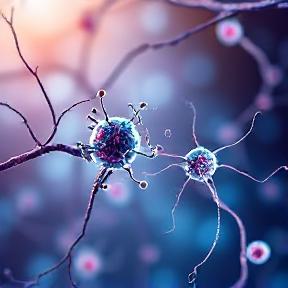
Is there a link between viral infection and ALS?
Is there a link between viral infection and ALS? Researchers have identified a specific type of mouse (CC023 strain) that responds to a viral infection in a way similar to humans with amyotrophic lateral sclerosis (ALS), providing a new animal model for studying the disease. The study found that the initial viral infection triggers an […]
🏥 Health
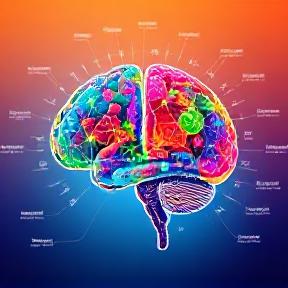
How brain activity changes during the day
How brain activity changes during the day Researchers have developed new methods to study brain activity throughout the day using mouse models, revealing changes in brain regions and networks that occur as mice wake up and sleep. The study found that brain activity starts in inner layers of the brain when mice wake up, but […]
🔬 Science

Star-shaped cells make a molecule that can ‘rewire’ the brains of mice with Down syndrome – understanding how could lead to new treatments
Star-shaped cells make a molecule that can ‘rewire’ the brains of mice with Down syndrome – understanding how could lead to new treatments Researchers have discovered that delivering a protein called pleiotrophin (Ptn) to star-shaped cells in the brain can “rewire” the brains of mice with Down syndrome, reversing changes to neural circuits and improving […]
🏥 Health
Listen: Why neuroscience hasn’t cracked brain disorders
Listen: Why neuroscience hasn’t cracked brain disorders A neuroscientist argues that the traditional “domino” view of the brain, where one broken piece can be fixed, has held back progress in treating conditions like depression and Alzheimer’s. The traditional view has led to frustration with slow progress despite powerful technologies and billions of dollars invested in […]
🔬 Science

Tool detects hidden signs of consciousness after brain injury
Tool detects hidden signs of consciousness after brain injury Researchers have developed an AI tool called SeeMe that detects hidden signs of consciousness after brain injury, which can identify patients who are conscious but unable to show it up to four days earlier than traditional clinical exams. The tool uses high-resolution video and computer vision […]
🏥 Health

Tiny windows of time may be key to your hearing
Tiny windows of time may be key to your hearing Researchers have found that the auditory cortex processes speech at a fixed time window, regardless of the speed of speech, challenging the idea that our brain’s processing should be yoked to the structure of words or syllables. The study used advanced neural recording techniques to […]
🔬 Science
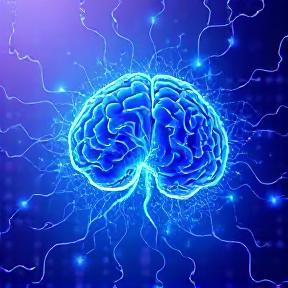
Brain’s electrical activity could predict Alzheimer’s development
Brain’s electrical activity could predict Alzheimer’s development Researchers have identified a brain-based biomarker that can predict whether mild cognitive impairment will develop into Alzheimer’s disease using electrical activity from neurons. A custom-built tool, called the Spectral Events Toolbox, was used to analyze brain activity recordings from 85 patients diagnosed with mild cognitive impairment and monitored […]
🏥 Health
Scientists grow mini brain in a lab
Scientists grow mini brain in a lab Scientists at Johns Hopkins University have successfully grown a mini brain organoid, complete with neural tissues and rudimentary blood vessels, marking an advance in research into neuropsychiatric disorders such as autism. The multi-region brain organoid (MRBO) is the first whole-brain organoid to be generated, allowing researchers to study […]
🔬 Science
Speech-based AI tool flags sign of Parkinson’s
Speech-based AI tool flags sign of Parkinson’s A new speech-based AI tool has been developed to help assess signs of Parkinson’s disease, with nearly 86% accuracy. The tool uses a web-based screening test that asks users to recite two pangrams, which are short sentences using all 26 letters of the alphabet. Users simply read aloud […]
🏥 Health
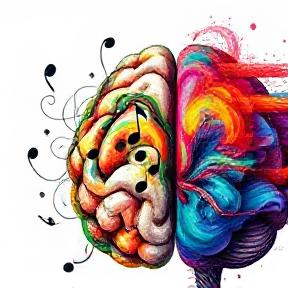
Your left and right brain hear language differently − a neuroscientist explains how
Your left and right brain hear language differently − a neuroscientist explains how Research suggests that the left and right hemispheres of the brain process language differently, with the left hemisphere typically dominating speech perception. The development of neural circuits in the auditory cortex, responsible for processing sound, follows a specific timeline, with the right […]
🔬 Science